The SCP Foundation in Poland — The History of The Polish Containment Project
By Jasiu06 and Draven Addams
By Jasiu06 and Draven Addams
NOTICE FROM THE FOUNDATION RECORDS AND INFORMATION SECURITY ADMINISTRATION
The following file serves as a general historical reference. The information contained herein may be false and fabricated to some extent, but despite this fact, it represents the official current version of the Foundation.
— James Moore, Site-120's General RAISA Chairman
Introduction
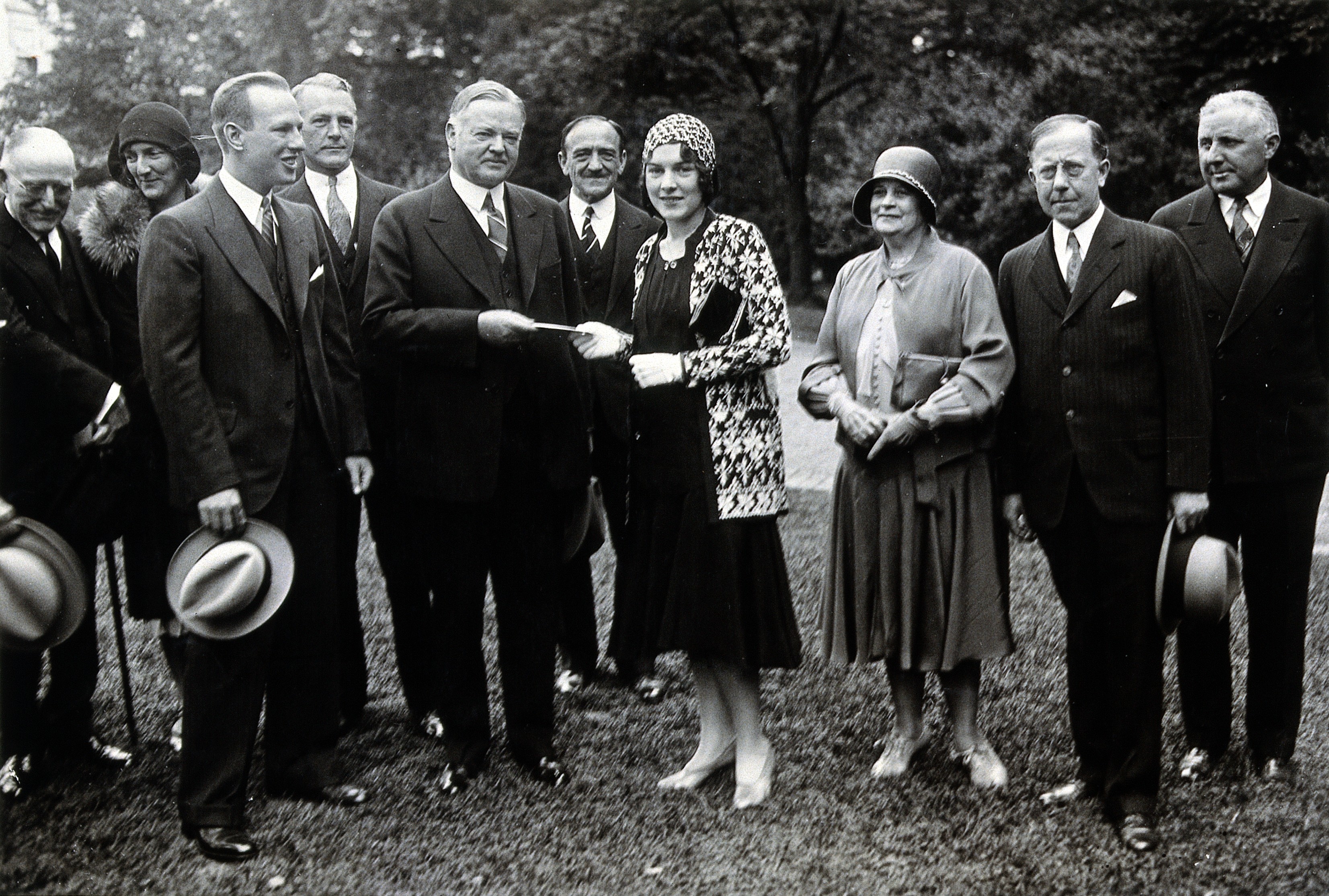
Meeting of members of the Polish Containment Project with the contemporary O5-█, 1931
The Polish Containment Project was an initiative founded in February 1914 by the now deceased O5-11.1 Its main purpose was to investigate the activity of Fae (Homo sapiens sidhe) and to confirm the existence as well as subsequent preservation of the anomalous Free Port of Esterberg (later classified as SCP-5373) largely inhabited by the previously mentioned Fae, located near Częstochowa in the former Kingdom of Poland.
Over time, however, the Project's goals evolved, and its primary mission became to establish a foothold for the Foundation in the newly formed post-World War I Republic of Poland. Initial plans to secure SCP-5373 with classic methods failed, due to the protection and establishment of laws guaranteeing the independence of Free Ports by the League of Nations in 1923.2 Despite this, however, the Foundation did happen to violate these laws several times and entered Esterberg unauthorized; however, aside from these few incidents, the Foundation abandoned its plans to secure SCP-5373 and focused on monitoring it and conducting unarmed research explorations in the city, which were allowed by a loophole in the law.
The Polish Containment Project was finally disbanded and incorporated into the Foundation in October 1945 after the end of World War II, also known in the anomalous world as the VII Occult War.3

O5-11 - The Visionary [DECEASED]
Male. Age unknown. Of Jewish and Slavic origin. In his lifetime, a figure strongly associated with the occult, esotericism and thaumaturgy. Responsible for the establishment of the Department of Ontokinetics, of which he was the original director. Pioneer in the field of modern life extension using thaumaturgy.
Responsible for significantly expanding the Foundation's influence around the world, particularly in Central and Eastern Europe; initiated, among other things, the Polish Containment Project in 1914. Fierce critic of the use of human personnel, especially D-Class, in experiments.
[DETAILS OF THE DEATH OF FORMER O5-11 ARE RESTRICTED TO LEVEL 5 OR HIGHER PERSONNEL]
Structure
During its existence, the Polish Containment Project had its own organizational structure and was divided into several specialized units responsible for various aspects of its functioning.
Polish Containment Project Director: The person responsible for coordinating and managing the activities of the Project, this position also entailed serving as the Director of Site-120, which was its command headquarters. Reporting directly to O5-11, the individuals holding this position were, respectively, Hannah Rivera from 1914 to 1916 and Raia Micheals from 1916 until the end of the Project.
Tactical Operations Command: The military unit of the Project, responsible for protecting Project facilities, securing anomalies, and even neutralizing them in extreme cases. All Operational Formations operating within the Polish Containment Project fell under the Command.
Unit of External Affairs and Diplomacy: Responsible for all Foundation contacts with the Polish government, as well as anomalous communities. Their tasks also included recruiting staff for the Foundation in Poland, intelligence, searching for new anomalies, and maintaining secrecy about Project activities, as well as spreading disinformation.
Unit of Applied and Theoretical Sciences: The experimentation and research division of the Project. Its tasks included developing new technology and equipment for the Project, as well as studying the anomalies it secured. They were often far more inclined than the rest of the Foundation to resort to more esoteric methods, which was related to O5-11 overseeing the Project.
Unit of Containment and Maintenance: Responsible for the maintenance and upkeep of the Project's equipment and taking care of the containment of anomalies secured by the Project.
Unit of Administration and Records: Responsible for all administration, accounting, logistics and management of Project activities. They were also in charge of maintaining the Project's archives, as well as researching various archival materials in order to gain information on new and already secured anomalies.
History
The Polish Containment Project existed for about 31 years, which can be further divided into three general periods lasting respectively:
1914-1918
The project was initiated by O5-11 in February 1914. At its top, Hannah Rivera, who had been the Director of Site-30, was placed in the role of administrator. The expedition under her leadership set out for the Kingdom of Poland in June 1914 a month before the start of World War I, which greatly hampered the original mission of the Project. Despite this, in early 1916 they were able to establish that Fae activity was concentrated around the Częstochowa region. During the search for the Free Port, SCP-52924 (then designated as PL-X0R38/0124) was accidentally discovered, around which Provisional Site-120 was established. That same year, a group of Fae terrorists known as GoI-120 ("Triumviraté") attacked it, causing some damage to SCP-5292 and killing Project Director Hannah Rivera.
Raia Micheals, formerly head of the Department of Science and a specialist in Theology, was chosen to lead the Project after Hannah's death. Also in May of that year, at Raia's request, Site-120 became an official facility,5 where the Command of the Polish Containment Project was located. In the following years, the Foundation focused on monitoring Esterberg and made several unsuccessful attempts to seize and secure it.
1919-1938
After the end of World War I and the establishment of an independent Polish state, the goals of the Project significantly expanded. At that time, it began to function as an agency of the Foundation dealing with anomalies in the Republic of Poland. It was during this period that the Project grew to its largest size in terms of staff and anomalies under its jurisdiction. The Foundation also abandoned its attempts to secure/acquire Esterberg due to the laws protecting anomalous Free Ports established by the League of Nations in 1923, but despite this, there were several incidents involving their violation by the Foundation.
During those years, the Project also encountered many anomalous organizations whose activity was greatly increased by the zenith of the so-called Paranormal Renaissance already underway since the end of the Sixth Occult War, the more important of which are listed below.
Chopinian Cult: A religious and artistic cult praising Frederic Chopin founded by Antoni Bukowski (1897-1940) w 19██. The main goal of the cult is to "Continue the work of the great composer".
Relations: Neutral
The Polish Ministry of Occult Affairs: An organ of the government of the Second Republic of Poland dealing with occult, esoteric, and anomalous matters. The Foundation and the MOA often worked together, as the goals of both organizations were similar. There were, however, incidents associated mainly with the Foundation's violation of the Anomalous Freeport Protection Act of 1923.
Relations: Friendly
Polish Anomalous Mushroompicking Association (PZGA): A group of enthusiasts dedicated to collecting, researching, and trading anomalous fungi. The origins of the organization date back to the turn of the 18th and 19th centuries.
Relations: Neutral
Triumviraté: A group of Fae (Homo sapiens sidhe) terrorists seeking to reclaim human territories for their species. Formed after the events of [REDACTED]. They were responsible for carrying out the attack on Site-120 in 1916.
Relations: Hostile
WWW: Unrecognized organization. Responsible for several attacks on Foundation facilities, usually connected with extra-dimensional anomalies. They likely possess a large arsenal of advanced paratechnological weapons.
Relations: Hostile
Beginning in 1933, the Foundation initiated the evacuation of most of its European assets, including those of the Polish Containment Project, to America and other safer locations due to the possibility of another global conflict in Europe following Adolf Hitler's rise to power in Germany. On the eve of the outbreak of war, only administrative, security, and maintenance personnel from the Polish Containment Project remained in Poland.
1939-1945
The Foundation officially remained neutral during the Second World War/VII Occult War until 1944, but in spite of this, the then overhead section of Site-120 and many other Project facilities were destroyed by bombing. In September 1944, the Foundation officially joined the War on the side of the Allies when Konrad Weiss, head of Obskurakorps research, was arrested and the AOI and the Foundation learned that Obskurakorps was planning to perform a powerful occult ritual known as the "Rite of Solomon". The Foundation, together with the AOI, succeeded in stopping its execution in Operation Aeon Dawn in January 1945. The remnants of the Project remaining in Poland during this period began to assist the Polish Underground State, which, after the defeat of the Warsaw Uprising, moved its capital to Częstochowa and used Esterberg as its base.
Also worth mentioning is that during these years, the previously mentioned Polish Ministry of Occult Affairs mostly emigrated to Three Portlands6 where its members helped co-found the AOI. They also contributed significantly to the Allied victory in 1943 during the Battle of Three Portlands against Obskuracorps commando forces. The attack occurred in order to sabotage the supply route between the U.S. and Great Britain, in which the Portlands played a significant role.
The project was finally dissolved and absorbed into the structures of the Foundation in October 1945 several months after the end of World War II, also known as the VII Occult War. Negotiations with the emerging government of the Polish People's Republic also began at that time in order to arrange a comfortable position for the Foundation in postwar Poland.
Dissolution and further activities of the Foundation in Poland
Current logo of Site-120
The Polish Containment Project was officially dissolved and absorbed into the standard structures of the Foundation on October 21, 1945 by a unanimous decision of the Overwatch Command. The Foundation also began negotiations with the newly formed government of the People's Republic of Poland, which guaranteed the Foundation a well-placed position in future years. Despite this, the Foundation's activity was to some extent diminished by the activities of the GRU Division "P" or Poland's ZM "Witch Slayer" Division; however, the situation was much better there than in other Warsaw Pact countries such as East Germany or Czechoslovakia.
Initially, Esterberg was inclined to cooperate with the new communist government, which guaranteed the city a great deal of independence from the latter. The Polish People's Republic officially called Esterberg "Tysiąclecie Górne"; this name is still used to some extent today. These relations, however, deteriorated significantly in the 1950s.
The former Director of the Polish Containment Project (who was also the Director of Site-120), Raia Micheals, eventually died in 1959, being replaced by Site-120 Director MacCarthy,7 who had previously been Assistant Director, as well as the head of the Tactical Operations Command during the last years of the Project's existence. Site-120 continues to serve as the main base of operations for the Foundation's activities in the Republic of Poland.
Source: SCP Foundation · CC BY-SA 3.0
Community rating
Was it worth the sleep you're about to lose?