Mountainous Essophysics
All models are wrong, but some are useful.
All models are wrong, but some are useful.
— George Edward Pelham Box, Statistician
2018
27 January
Antarctica
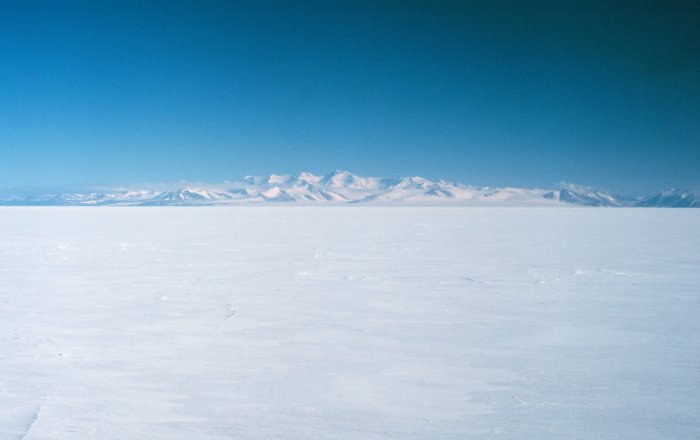
There is a mountain in the far south of the world. It is made of layers of sandstone and siltstone compressed by millions of years of pressure, atop a stable foundation of solid volcanic rock. From most angles, it seems twisted to the eye, a slope all-too-gentle for such a young mountain range, geologically speaking. But from a Foundation outpost a few klicks north, when the sun hits it just right in the middle of a long Antarctic summer, it looks just like a graph of world inequality.
The Foundation and its predecessors have never quite known exactly how to classify it, or even exactly what it was at first. The HMFSCP thought it represented wealth or growth or the reach of Albion, and only in more recent decades has its true meaning become obvious. It has been passed between psychologists and noosphericists, anart consultants and economists, geologists and xenoarchaeologists. After a long journey to ever higher levels of classification, dominion over it now lies with the essophysicists.
The "essophysical embodiment" is the innovation, the unintuitive truth or convenient lie, the heuristic ansatz at the heart of essophysics: the idea that concepts, platonic forms from the world of ideas, can and have manifested physically.
Ezekiel Yang is the Director of the Department of Financial Esoterica. He is not an essophysicist. His doctorate was in Mathematical Physics, from a lifetime ago. Like so many physicists, he'd worked on Wall Street for a number of years, and he'd only joined the Foundation after 2008. After the mundane crash, and the Foundation's own Faust Bank debacle.
He's been around for a while, but he's managed to avoid thinking too hard about essophysics until now. It strains credulity. Even now, it's foreign to him.
All models are wrong. Some are useful. Essophysics makes grand promises with grand premises, stretches beyond the edges of conventional sciences to a place where replication and verification have no meaning.
But he can't, for the life of him, think of a better model for this particular phenomenon.
He drops a pair of binoculars. "That thing," he says, pausing, wondering what to say next. Is absurd? Is really the manifestation of global wealth distribution? Is kind of obvious-looking? He settles for "makes no sense."
"Yes, that's essophysics for you," Alba Genevieve says, speaking as if to a very rude, very small child. "This world is much larger and much more beautiful than any of us can imagine. Concepts can, and often do, take physical form."
"Systems," Yang says pensively, looking at the mountain. Its gray rock is stark against the white of the Antarctic snow and the blue of the winter sky.
"What about them?" Genivieve says. "Everything's part of a system."
"The world economy is a complex network of nested subnetworks within subnetworks, divided by sector and country at the very least, and somehow, against all logic, global wealth distribution manifests as a mountain range in Antarctica?"
Dr. Genevieve purses her lips. She seems on the verge of rolling her eyes, and on some level Yang understands how he must sound. "I have dedicated my life to this work, and believe me, I know what the hell I'm doing. What was your doctorate in again? Economics? Business? Finance?"
"Mathematics, which is pretty close when it comes to insufferability," Yang says. "Am I wrong?"
She takes a deep breath, which billows out before the two of them over the Antarctic plains. Yang supposes he's won a bit of respect from her, in that.
"'The economy' is hardly more abstract than 'death' is, if you really want to get down to a systemic level," Genevieve says. "Chemical signals, electrical impulses, all in motion until death takes hold. Life is… an emergent phenomenon. But we know for sure that death has an essophysical embodiment."
"I could buy that," Yang says, "except we made up the metrics of world inequality. We as humans wove together this concept of rich and poor from whole cloth. And even then, the world sees all those charts that say the 1% hold 99% of the world's wealth, but we know those charts are wrong. They're complete lies, because here at the Foundation we hoard so much wealth that peak should be taller than Everest on its tall end. Reality reflects a lie that we're telling. Why?"
Genevieve looks at him with some concern. "Why do you have Level 5 access to 4752's documentation, anyways? You're the Director of what, the Department of Math? Finance? Math Finance?"
There's a certain tendency in the Foundation for veteran scientists to take each other seriously. New joiners from industry or civilian academia tend to be more skeptical or derisive, but the experience of containment or survival quickly divests them from these delusions. In the Foundation, you either learn to respect your colleagues and their expertises, or you end up needing medical care for the rest of your natural life. He appreciates it, this getting down to business, even if it is wrapped in skepticism, even if he ultimately must deflect.
"O5 order," he says. He doesn't elaborate.
"For god's sake, I swear to fucking god, if they want you to fuck with the economy for their own gain—"
"Give me some credit," Yang says. "I'm too much of a nerd to support that."
He's hoping he can lighten the mood with a bit of levity, but she doesn't seem any less grave. "For science," she says with extreme derision. "That's never ended poorly before."
He exhales. His breath hovers in front of him, tiny crystals precipitating out of the air. A cloud drifts across the sun, casting them in shadow.
"I think," he says after a while. "That I have far more to lose from damaging or ruining 4752 than to gain. The world does."
She doesn't respond.
"Like I said, the world economy is a complex system, and this thing is a conceptual representation of an emergent property of that system. That's a literalization of a level of abstraction on top of something that's already abstract."
Still no response.
"If I were to try and use a lever to move that mountain— "
"Don't even think about it."
"I wasn't," he says. He's read the file, after all. He's fully aware that a slight shift of the stones atop Mount Inequality propagate their changes to the economy and vice-versa — the smallest shaking of stones in the wrong places could cost the economy millions in a first shift, which would then propagate into a landslide.
"It could lead to a bloodbath."
He wonders if he's misjudged. His line of work is less lethal. Less hair-trigger. But his choice of metaphor, around someone who's lived and breathed essophysics—
He can see why Genevieve would be so tense. And like it or not, they'll be working together, at least a little longer.
"You and I," he says, in one final attempt, "well, I guess I can only speak for myself. The only power I have is knowledge. I've seen behind the curtain, and I know how the world truly works. But all of that knowledge is worthless next to to the whims of overgrown child billionaire, some Zuckerberg or Koch or Musk — or the O5s. When they giggle, the world shakes, and all I can do, even with everything I know, is understand why it happened after the fact."
She exhales. She seems more at ease, though hardly happier.
"Yeah."
The word hangs in the air, a heavy truth.
"So all that gravel," he says, pointing at the speckles of dark gray near the mountain. "4752 sheds it naturally?"
Genevieve nods. "Doesn't seem to be harmful. What do you make of it?"
"Natural wealth decay, I'd imagine. Cargo lost at sea, amortization on the balance sheets, lost crypto wallets…"
It's a curious thing to think about — there's ice and snow atop that mountain. Does it represent anything? Is there some illusory store of wealth that's more prone to slipping than others, more likely to transform from true value into meaninglessness?
He snorts.
"What's so funny now?" Genevieve asks, crossing her arms.
"If an avalanche happens on 4752, do you think that would crash the crypto markets? The snow isn't part of the mountain any more than crypto has real value."
For a moment it seems that she's going to berate him for even entertaining the thought, but then a smirk crosses her face. "Testing that would be against protocol. Shame."
"Sure would be," he says. Still, he can't help but feel a twinge of pity. He and Dr. Genevieve know better, having gotten a peek at the true systems of pulleys and levers behind the world, the spiderwebs of anomalous influence that ripple out as meaningless noise into the mundane world but that have chains of logical cause and effect behind them. But the average Joe, who just wants a chance at a better life?
To them, the roller coaster of cryptocurrency must seem like an upward rocket.
2018
6 February
Area-150, Bridger-Teton National Forest, Wyoming, USA
It surprises many to learn that the core office of the Department of Financial Esoterica is in the science complexes of Area-150. It's a far cry from New York or London or Hong Kong or any other world capitals of finance, which is reserved for field offices or rooms borrowed from more permanent departments. This is by design.
Although other Foundationeers often ask Ezekiel Yang why he chooses to live and work so remotely from the bustling hearts of global finance, their questions are easily assuaged by a single logo: "Marshall, Carter, & Dark: London | Hong Kong | New York". Being a moneyman, in the cities where the most powerful auction house and power broker behind the Veil of Normalcy operates at its strongest, carries mortal risks that most financiers don't have to worry about.
Behind the Veil, corporate headhunting is literal. Not always, but often enough to be dangerous.
So while it isn't the synergistic madness of New York, the mad science of Area-150 has a certain charm all the same. The people are certainly smarter and snappier — more "heroic," if you believe the pataphysicists and the narrativists, which he doesn't — but that all abates the further one gets from Area-150.
Nothing happens in Wyoming.
The relatively remote location of Area-150 makes it better as a location for applied laboratory experiments. In the mundane world, finance laboratory experiments are nonexistent — money is an abstraction that is accessed as numbers on a computer screen. But in the realm of the anomalous, in the rhizomic and the noospheric, money is a carrier of power and influence.
He sits on a couch in the open floor for the Department of Financial Esoterica. He likes having the background hustle and bustle of his colleagues, which he wouldn't get in the office, and he doesn't need to use any of the practical scientific instruments in the lab or the data streams in the data room.
He sits, lost in thought, staring at the pebble on the coffee table in front of him.
If money is the elementary particle of the financial system, like the quark or the string to atomic theory, then this tiny fragment of SCP-4752, discarded naturally, is a shard of glass from the Empire State Building. You wouldn't expect moving this tiny shard of glass to cause nuclear explosions or traffic jams in lower Manhattan, but this pebble might — keyword might — be capable of the financial equivalent.
"I hate essophysics," he says, mostly to himself. Unfortunately, he's not alone in the office.
"Something even the brilliant Ezekiel Yang can't handle!"
Zeke groans. "You can't possibly help me with this, Archie."
Archibald Bartholemew Carnegie IV ("the Fourth", Zeke always pronounces in his head) almost — almost — looks hurt at that, an exaggerated frown passing across his chiseled masculine features. Zeke's heard he's quite popular with visiting researchers whenever Area-150 hosts its conventions and their afterparties.
He wouldn't know.
"Come on, man, don't be like that," Archie says. "I thought you liked me!"
"I do, Archie," Zeke says. It's not even a lie. But that simply doesn't mean that—
"So essophysics, right?" Archie says. "That's the platonic world of forms?"
Zeke has no idea how Archie knows the word, since as far as he can tell it's classified. But everyone tends to have loose lips after a few drinks of alcohol, and Area-150 houses the best, brightest, and most hedonistic.
"Let me guess. A few philosophy classes in undergrad?"
"And a lot of nerd bloggers too. Man, I was such a nerd when I was a teen — no offense."
None is taken, of course. Area-150 is a place for intellectuals, scientists at their very best, and whenever Zeke feels out of place as a finance researcher he looks at Archibald Bartholomew Carnegie the Fourth and feels assuaged. It's only a little aggravating to have Archie slightly ahead of him in any field.
"How was Florida?" Zeke asks, trying to change the subject.
"Warmer than Antarctica, I'd bet," Archie says. "Man, those P&L guys, they party hard when they do successful M&A."
P&L doesn't mean profit and loss, as is common finance parlance, but rather the Department of Procurement and Liquidation, one of the Foundation's grab-bag departments, for all things involving purchasing. Somehow their aegis includes both corporate acquisitions and little shops on the road that weren't there yesterday. Zeke doesn't question it too much. He's been at enough corporations to see them upsize and downsize and reorg and deorg. If they're good at what they do, nobody is going to complain — an inspiration.
M&A means mergers and acquisitions, like it does in the mundane world.
"So what's even down there?" Archie asks. "Santa Claus? Gonna sell a commodity strangle on Santa's toy production?"
"Santa is at the North Pole," Zeke says. "There are like five Santas and the ones that make toys don't do it in a factory."
"Yeah, yeah, I don't think I'm cleared to know about that," Archie says. He refocuses and pulls his chair up next to Zeke. "So what's the rock?"
It's hard to put it in words, and he only has theories, and all the metaphors he can think of only get more and more tortured.
If you pick a twig off of the forest floor, it's no longer a tree itself. But a twig, if diseased, cannot transmit that disease to the forest itself. He's not sure the same can be said for this pebble.
It's less than ten grams in mass, utterly insignificant compared to SCP-4752, yet the act of transporting it from Antarctica to Wyoming… he's watched the market news like a hawk. He'd half-expected to learn that the economy had shattered into pieces the moment his plane had landed, and had been incredibly relieved to know that it had not. But that didn't make him feel any better.
He's consulted with 150's cross-disciplinary experts. Asked thaumatologists about the application of the Law of Contagion, Essophysicists about Parts of a Whole, but they've all given him nothing more than further confusion. The two disciplines cross much less than one would expect, which was frustrating as an outsider.
"A magic totem," Zeke says. "Or the equivalent of the holy prepuce. Wish I could tell you, Archie, but this has even me stumped."
He's fully aware that he's only stumped because he is an expert in an extremely narrow set of subfields and that he doesn't quite know where to turn.
"Well, let me know if I can help, boss," Archie says. Zeke is fairly sure he won't be able to. He appreciates the thought, but he needs a bit more than that.
Zeke stretches his legs for a bit and wanders about the office. He's proud of this place. Financial Esoterica has a few rooms of its own now, almost spartan in design, but ultimately necessary. Similar to what Yang's worked with in other places. He's fought to keep them up-to-date with every budgetary review. So far, it's worked.
Area-150's Financial Esoterica Labs are far less complicated than the other departments here. After the first few attempts on his life, Ezekiel Yang had been more than happy to flee to Area-150 and mooch off of other departments' resources. That had worked for about three years or so. But with the increasing rise of computational finance, coupled with the increasing danger of the world, it was ever less practical to borrow the resources of others.
At that point, back in '12, he'd made an appeal for dedicated resources and a dedicated space. And because of Financial Esoterica's track record of good work, it had been approved with little fuss. Everything here is a testament to the quality of his people.
There's a room that's a common sight in any financial institution — a room filled with screens and terminals streaming financial data. All of the common staples are there, the most common of them being the Bloomberg Terminal. At ten thousand dollars a year, it's an expensive state-of-the-art solution in the mundane world, but behind the veil it's shockingly antiquated. There's a GoReChaoS — Goldbaker-Reinz Chaotic Systems Intelligence or something equally schlocky, which streams some of the most interesting yet most utterly unverifiable and therefore untrustworthy data possible from the Foundation's beloved and oddly prescient insurer, perpetual thorn in Zeke's side.
But the star of the room is ultimately RAISA's own in-house data solutions, a streaming terminal that constantly sends preprocessed data from Site-7, the RAISA headquarters in the Bering Sea. It scares Zeke, sometimes, how much the Foundation knows about everyone and just how they'd gotten all that data — he isn't privy to the exact details, but the data was far more comprehensive than even the Five Eyes program — yet he can't deny that it's absurdly useful.
There's a joke among finance professors about how every finance or business undergrad thinks they could predict the performance of Walmart stock by seeing how many cars were in satellite images of their parking lots; RAISA's data streams make it possible to actually do that, to capture real-time video of corporate executives having fist fights or hand shakes to predict the stock swings that would follow. Doing so, of course, is a way to get a quick visit from your local Ethics Committee Liaison.
The practical labs for Financial Esoterica are impressive to the average finance person but mundane to most scientists. There are mass spectrometers, scales, spectral analyzers, oscilloscopes, and hundreds of other implements that wouldn't have been out of place in the average physics or chemistry lab. Although materials scientists and physicists in the Foundation test most artifacts for dangerous properties before approving them for Financial Esoterica experimentation, Zeke likes having these tools around just in case. Scientists testing for danger are looking at a very specific subset of properties: whether a coin was radioactive or ectoentropic, whether a dollar bill had adverse psychological effects, and so on and so forth. They're generally not well-versed in the bizarre financial jargon that often became common on Wall Street and its associated territories.
Words like "the velocity of money", "options chain", "payment waterfall" mean nothing to most normal, sane, educated people, which is why they keep Zeke and his Department around. Especially since a large number of anomalies can be described with disgustingly twee plays on words.
He's sure none of the equipment or data can reasonably help him with this. He glances at his office, at his burgeoning bookshelf, and wonders if something there might be insightful.
He doubts it. He has math books, and finance books, and physics books, and economics books, but very few on philosophy.
He returns to the coffee table, where the pebble rests.
For this shard of 4752, further destructive testing is out of the question. The Foundation has observed geological shifts on the mountain every time the markets crashed, and Ezekiel Yang has no desire to explain to his superiors that he'd crashed the economy by accident.
All he can do is sit and think, staring at the stone. Holding it before him in his mind's eye. It's cold to the touch.
A part of him really wishes this can be over with quickly. There's a happy hour in the mess hall this evening, so he doesn't want to be working so long tonight. He wants to have drinks with his colleagues, maybe mingle with some of the more prestigious scientists of 150 and see what startling innovations they're doubtless working on now. But he knows that the question of the stone will stir within his mind, heavy and unmoving, no matter how much he drinks or mingles.
He touches it, feels its coolness beneath his hand. It slowly starts to climb towards his body temperature, and he wonders whether this too counts as motion, whether the transfer of thermal energy from his body to the stone counts as meaningful action when it pertains to 4752. Or perhaps this whole exercise is pointless, and a part, separated from the whole, bears none of its properties. In such a case, if the whole mountain were to be demolished at once, but not erased, in any sense — if it were to wink out of existence, he imagined one would see the total redistribution of wealth across humanity — if one were to skim layers off the topmost slope, evenly, following the contours of descent, would it be possible to excavate 4752 in its entirety, reduce it from a mountainous essophysical representation, to stones with no meaning at all?
But that was an assumption in itself that he cannot verify, and that he can't test. If he's wrong, then such a drastic transformation of "wealth inequality" would have similar shifts upon the world economy, which would then ripple upon each other. Ripple upon ripple upon ripple.
It was curious that the representation was in Antarctica, a place where no human being had strode for thousands of years until the modern era. He wonders if there was a significance beyond coincidence to that, whether other similar representations or mountains or mounds might have existed, scattered throughout the world, but dismantled or altered by human civilizations in the long past. Cerro De Potosi, the great Andean mound of silver, had carried so much wealth in it that exports of it had collapsed the Spanish economy for a time. A metaphor, of course, but perhaps the analogy was sound. Perhaps the ancient world had hundreds of these abstractions of properties of wealth, localized to kingdoms or nations or empires, only to be dismantled by their owners, bringing ruin to their peoples as a result.
And if that was the case, just how did the mound become entangled with the global economy, of all things, specifically? It's remote, beyond the reach of any one human creation except for global abstractions of them all. He's vaguely aware, at the corners of his mind, that the Foundation has multiple space initiatives and related colonization approaches; similarly aware that the Foundation's rival, the Global Occult Coalition, has some presence in the outer Solar System.
Are the vast expenditures of wealth poured into leaving the planet, vanishing into the upper atmosphere and beyond, counted in the Mountain's abstraction of inequality? Or is there an asteroid or comet, currently far beyond the Oort Cloud, that reflects inequality as well, some abstraction of the current limits of human wealth?
If humanity as a whole eventually achieved interstellar dominion, would its wealth still be represented by a single mountain on a pale blue dot? Perhaps the effect was localized to Earth, but that seems implausible to him; he's spent enough time around psychologists and noosphericists and philosophers to have some inkling of how causations work in the human psychosphere. If 4752 truly reflects the inequality of humanity, then it reflects the sum total of all the human interactions between people, that generate wealth and concentrate it in the hands of just a few individuals.
And if humanity one day breached the stars, that inequality would only grow. There would be planets with exorbitant wealth, undreamt of by current standards, and planets in such squalor that the humans there would be unable to even imagine that their ancestors had pierced the sky. Would each of those planets have mountains taking on such distorted shapes in their respective terra nullia, or would Terran 4752 grow to reflect this pangalactic distribution, its highest peak becoming impossibly thin and impossibly tall, as the richest one-trillionth of all humans held 99.9999999% of the wealth?
It frustrates him that he'll never know for sure.
He lets the fragment of 4752 slip through his fingers, letting it clatter upon the lab bench. What does it mean? There's constant seismic activity around 4752, analogous to the day-to-day shifting of wealth, so he doesn't expect this small distortion to mean much, especially so far away from its source. He stares at it, examining every bump on its rough exterior, every way the light falls on its matte surface. Hoping that through examination alone, however hubristically, however misguidedly, he can extract some insight, some nugget of understanding.
"Yo, Zeke, you're not going to believe this!"
Archibald Bartholemew Carnegie the Fourth bursts into the lab, waving his iPhone frantically in the air. Zeke slams his fist on the lab table.
"Archie. What have I told you about—"
"You're not going to figure out jack shit just by staring at the rock!"
"I was on to something," Zeke says. "I was. And now I've lost it. Thanks."
"Always glad to bring you down to earth, boss," Archie says.
Zeke's annoyance, while abating, is still present. "What was so important that you needed to interrupt me while I was conducting some important thought experiments?"
"First, we've got that happy hour in fifteen minutes. Second, you know Elon Musk?"
Zeke clenches his jaw.
"He did it. He actually did it!"
"What," Zeke says, forcing himself to keep the venom out of his voice, "did Mr. Musk do this time."
"Come on, man, you really telling me you haven't heard?"
"I've been in Antarctica for the past week on secret business."
Archie waves his iPhone in Zeke's face. The screen protector is pockmarked in a few places, and Archie's seemingly tried his best to fix the damage through liberal applied force. Zeke sees a rather unpleasant tweet on the screen.
"He launched his car into space, man! Can you believe this guy?"
"Archie, why do you think I—" Zeke begins to snap, but he stops himself. He inhales a deep breath.
He looks back at the pebble. Does some quick ballpark Fermi estimations in his head. A rough guess of the mass of the pebble. A very rough guess of the mass of 4752. A rough estimate of human wealth. The rough value of a Tesla roadster.
He reaches a very irritating conclusion.
Launch a probe into space, like NASA or ESA have done a hundred times before, and it remains the property of the country that launched it, collecting scientific knowledge for the betterment of humankind as a whole, slowly depreciating as its parts decay in the interstellar void.
Launch a billionaire's personal car into space, and where does that wealth go?
"I need a fucking drink. Let's go."
Other works by LORDXVNV!
| SCPs | |
|---|---|
| SCP-6987 | Rating: 577 |
| SCP-8008 | Rating: 529 |
| SCP-7069 | Rating: 315 |
| SCP-7997 | Rating: 247 |
| SCP-6572 | Rating: 222 |
| SCP-1337-EX | Rating: 186 |
| SCP-6433 | Rating: 179 |
| SCP-7715 | Rating: 140 |
| SCP-8616 | Rating: 137 |
| SCP-7335 | Rating: 104 |
| SCP-6248 | Rating: 103 |
| SCP-8814 | Rating: 78 |
| SCP-7576 | Rating: 76 |
| SCP-9013 | Rating: 72 |
| SCP-1392 | Rating: 69 |
| SCP-6510 | Rating: 59 |
| SCP-7634 | Rating: 52 |
| SCP-7272 | Rating: 47 |
| Tales | |
|---|---|
| These 5 Colleges are the Best for Learning Dark Powers! Number 1 Will SHOCK You! | Rating: 302 |
| CCK-Class--Sorry, Original Character Interaction Story | Rating: 169 |
| Requiem For Ice Spider | Rating: 165 |
| A Faerie Tale Of Twin Queens | Rating: 123 |
| Taking The Reinz | Rating: 115 |
| Mountainous Essophysics | Rating: 109 |
| Insurance | Rating: 105 |
| Ecce Insurgo | Rating: 100 |
| Garfield Timeline | Rating: 97 |
| alex thorley dreams of sushi. | Rating: 94 |
| Miau Miau, Asheworth-kun | Rating: 77 |
| Muddy Skies | Rating: 76 |
| Lampeter Registrar Entry: The Smog-Wastes of NeoAmerica | Rating: 71 |
| Life Can Be A Surprise | Rating: 66 |
| Man on a Mission | Rating: 63 |
| CAPSLOCK COLLUSION | Rating: 61 |
| Teamwork | Rating: 57 |
| The Phlegmfont | Rating: 51 |
| The Arcana Institute Of Xerophylla | Rating: 48 |
| WE LIVE IN A SOCIETY | Rating: 44 |
| Cheese Is Risen | Rating: 42 |
| Three Lessons for Endless Night | Rating: 40 |
| The Road To Arcana | Rating: 39 |
| But Never Trees. | Rating: 36 |
| Names Stricken | Rating: 34 |
| Ghost Signal | Rating: 30 |
| THEREVEN: GERMINATION | Rating: 29 |
| Deus Volt! | Rating: 28 |
| GOI Formats | |
|---|---|
| SPC-6500: INFINITESIMAL | Rating: 174 |
| SPC-105: WORLD IRIS | Rating: 112 |
| SPC-1981: RONALD REAGAN SHARKED UP WHILE TALKING | Rating: 107 |
| HIST.327: Comparative Mythology of Mekhanism and Nälkä | Rating: 90 |
| SPC-1258: CERULEAN GLOVE | Rating: 90 |
| SPC-179: GLORIOUS BEACON | Rating: 88 |
| KTE-6990-Mendel-Nimuebusterchild — "Werebeast Curse" | Rating: 83 |
| Project Proposal 2007-012: "A Life Well Lived" | Rating: 79 |
| The Milkssiah | Rating: 68 |
| A Wandsman in a Vegas Cathouse | Rating: 59 |
| SPC-166: CERISE CERES | Rating: 54 |
| A Wandsman In The Greaze Lands Of Kansas | Rating: 51 |
| 1 Staar Cuttt 2 5 | Rating: 51 |
| SPC-1548 | Rating: 45 |
| SPC-CN-985: FIST CONTACT | Rating: 38 |
| Hubs | |
|---|---|
| Goldbaker-Reinz Hub | Rating: 148 |
| April Fools Hub | Rating: 60 |
| NIGHTFALL: Qui Lactis | Rating: 48 |
Collaborations!
| SCPs | ||
|---|---|---|
| Page | Title | Co-Author |
| SCP-6301 | Funky Finn's Children Happy Hour | Grigori Karpin, GremlinGroup |
| SCP-6447 | Sinners' Symphony | Many. |
| SCP-6483 | The Polar Express | Ralliston |
| SCP-6542 | Virgin Dairy 2: SECOND CHURNING | JakdragonX |
| SCP-6596 | 8 Mile: The Beast of Lust and Hatred Born | PlaguePJP |
| SCP-6760 | Better Luck Next Time | Liryn |
| Tales | ||
| Page | Co-Author | |
| A Nightmare Dreary | DodoDevil, DrGooday, LAN 2D, Impperatrix | |
| The Bathrooms Wiki | THE YURT | |
| Hubs | ||
| Page | Co-Author | |
| SPC Hub | MrWrong, Lt Flops, PeppersGhost | |
| Holiday Hub | Deadly Bread, PeppersGhost, TheBoxOfFun does not match any existing user name |
Source: SCP Foundation · CC BY-SA 3.0
Community rating
Was it worth the sleep you're about to lose?