An Anthropological Approach to Sarkicism - Case Study 05: Seŭlga of the Korean Peninsular
<< Case Study 04: House Kurinuka | Case Study 05: Korean Seŭlga | Case Study 06: The Èisteachd an Tsrutha of the Highlands >>
<< Case Study 04: House Kurinuka | Case Study 05: Korean Seŭlga | Case Study 06: The Èisteachd an Tsrutha of the Highlands >>
An Anthropological Approach to Sarkicism
Dr Myo-yŏng Yi, Department of Anthropology
Forward:
Our understanding of Sarkicism has changed dramatically over the last few decades. This information has revealed a diverse and shifting paradigm far different from the monolithic creed first hypothesised. We can now paint a broader, more detailed picture of the Sarkic religion, its various sects and cultural traditions.
Modern sects are the product of divergent interpretations, many bearing a mere superficial resemblance to their ancient progenitor cult. Most unexpected, especially among early scholars of Sarkicism such as myself, are the seemingly benevolent intentions of its founders. The road to hell, it is often said, is paved with good intentions - an aphorism the Foundation must always keep close in mind, for despite the aeons between us, we gaze into that very same abyss.
And like the ancient Sarkites, we have found it full of monsters.
Dr Myoyŏng Yi, an expert on the rise of anomalous religions in Asia, has contributed significantly with his discovery of Nälkite communities in his country, Korea. This report compiles his collection of information gained from dwelling among the Seŭlga people.
Dr Judith Low, Senior Adviser at the Department of History - Religious GoI Threat Analysis.
Case Study 05: The Seŭlga of the Korean Peninsular
Overview:
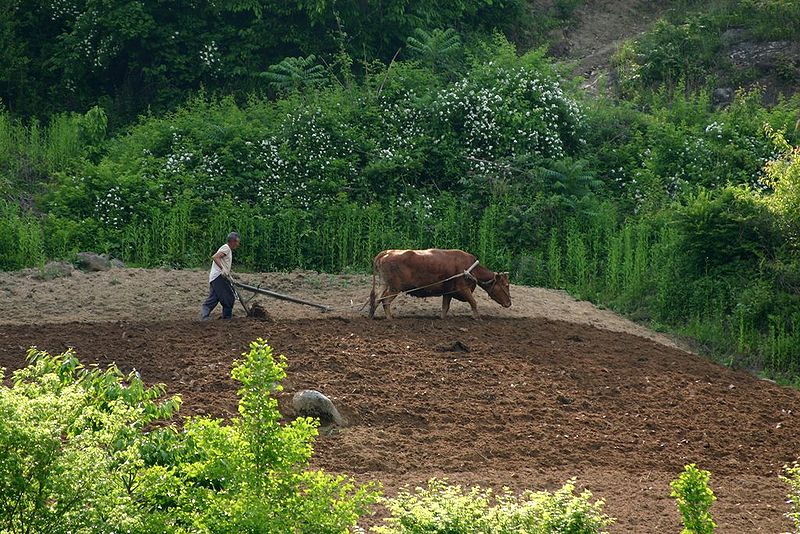
Soŭl hamlet resident crofting with cattle.
According to Korean mythological tradition, mountains harbour a mystical force, and the living of Se-ŭl-ga(세을가, 世乙加) (read [se'ɯ̽ɭ'ɡɐ]) people is no exception. The Seŭlga people, or the Seulgaites are a Sarkite community living deep in the Sobæk mountain range. Unlike most other diasporic Sarkic cults, they are of exclusively Korean descent.
The Seŭlgaites dwell in the So-ŭl hamlet(소을촌, 瘙乙村), located in an extradimensional space. Similar to other rural Korean communities, their lives are centred around subsistence crofting and animal husbandry. The current religious leader of the Soŭl hamlet is Seŭljinin Myŏng-hyŏn(명현, 明玄).
History:
Unlike other Sarkic cults that emerged after the Sarkic diaspora from 1200 B.C.E to 1000 B.C.E, the Seŭlga were considerably less affected by the event. A considerable existence of Sarkic cults in neighboring countries suggests that the Korean Peninsula was also included within the influence of the Diaspora. However, circumstances implied in various literatures suggests that the proportion of ethnic Korean among the early believers of the Seŭlga was overwhelmingly large.
Seŭlga's history starts from the arrival of an entity, named Chŏ-yong(처용, 處容) arrived at Port Gæ-un(개운포, 開雲浦), Silla on 879 A.D. According to the "Mr. Chŏyong and the Temple of Manghæ""Chŏ-yong-rang-mang-hæ-sa" (「처용랑망해사」, 處容郞望海寺) from the non-anomalous manuscript the Mirabilia of the Three KingdomsSam-guk-yu-sa (『삼국유사』, 三國遺事), King Hŏngang, the then-king of Silla, became lost at the seashore due to fog and clouds. After the court astrologer told the king that the dragon of the eastern sea created such phenomena, the king built a temple for the dragon. The dragon, pleased by the king's work, brought with it its seven sons. The sons played instruments, sang and danced in front of the king, praising his good deeds, after which one of the sons followed the king to the capital of Silla. This son was Chŏyong. The King appointed him as the official 9th-rankGŭp-gan (급간, 級干) to aid him with his governance.
Another tale known in the non-anomalous world was that the king arranged a marriage for Chŏyong to a lovely lady, to win his favour. However, a pox demon,Yŏk-sin (역신, 疫神) jealous of Chŏyong, morphed into a human and snuck into his house to commit adultery with his wife. Chŏyong, returning home, witnessed two people lying together in his wife's bed. He then walked out singing and dancing. The song was called "Chŏ-yong-ga"(처용가, 處容歌), and the dance was called "Chŏ-yong-mu"(처용무, 處容舞). After listening to this, the pox demon kneeled in front of him. It begged for forgiveness, promising to never appear in front of his face, including in drawings, and then disappeared. Later the people of Silla would hang portraits of Chŏyong on the door to prevent plagues.
As such, the Seŭlgaites consider Chŏyong, a historical figure widely known in the non-anomalous world, to be the founder of Seŭlga. According to Seŭlgaite records, its spread started after his arrival and expanded under the implicit approval of the Crown. Its expansion slowed down after the founding of the Goryŏ dynasty. But there was minimal persecution because Buddism was Goryŏ's state religion. The earliest written records of Seŭlgaite hamlets date back to this period.
The Josŏn dynasty proved harsher for the Seŭlgaites, some of whom forming communities of their own and others of whom lived among relative proximity to the non-anomalous world. Due to Josŏn's policy of backing Confucianism and suppressing Buddhism, the Seŭlgaites who were caught in such pogroms found themselves a target of the Not-saying Temporary InspectorateBul-ŏ-do-gam (불어도감, 不語都監)1 and its successor, the Anti-abomination GuardI-gŭm-wi (이금위, 異禁衛). Anomalous defensive measures, a trait of Seŭlgaite communities to this day, are thought to have been developed from this period. Seŭlga became a an entirely underground religion, spread covertly amongst the lower class.
Aggressions by the normalcy preservation agencies lessened as years passed. However, alongside the non-anomalous crofting population, the Seŭlgaites consequently suffered from increased extortion and government corruption. Therefore, they attempted to step into the non-anomalous world as Josŏn opened its port and society experienced rapid changes. However, such attempts were thwarted by the Japanese annexation of Korea in 1910 and the invasion of Soŭl hamlet in 1912.
The original Soŭl hamlet was located on top of Mount Jiri(지리산, 智異山) and was equipped with various anomalous defenses including pretermemetic wardings similar to SCP-3855 or SCP-3440, SK-BIO organisms bred for fortification, and the sigil system similar to the Ūrma of Divoši. Moreover, it was a holy land for the Seŭlgaites, as it is the first hamlet that Chŏyong purportedly built. IJAMEA reports claim that in April of 1912, five platoons under the command of Major Hanno Nikaho and Major Shinpei Hiranuma attacked this hamlet according to Operation Hakutaku III, killing an unspecified number of few residents, including the then Jinin Pa-yŏm(파염, 播染). Most captured Soŭl hamlet residents are thought to have been transferred to bases in Josŏn and have fallen victims to numerous biological experiments. The platoon also looted many holy and historical artefacts in the hamlet, destroying most hamlets' facilities. Soŭl hamlet was left in devastation. From this point, the Seŭlgaites developed an intense hatred for the Japanese empire. Some members took action, joining resistance movements against the empire.
As Korea regained independence, the Seŭlgaites had an opportunity to rebuild after years of hardship. However, this hope was lost when the Korean civil war started in 1950. The war devastated most Seŭlga communities, as it divided the Korean peninsula in two, breaking all contact with Seŭlgaites in the North. After the war, the Southern Seŭlgaites rebuilt the Soŭl hamlet, which lives on till this day.
Culture, Tradition, and Misconceptions:
While “Seŭlga” shares phonetic traits with the term ‘Sarkic,’ this resemblance is only coincidental. In fact, "Seŭlga" is the transcription of "Nälkä" using I-du,(이두, 吏讀)2 which became the name of the community and their religious practices. Because of this, Seŭlgaites refer to other Sarkic sects as "Seŭlga" too. Their religious doctrines are heavily influenced by Korean Buddhism, which is thought to result from their history of hiding their beliefs from external eyes, during and after the Joeson dynasty.
The most distinct part is their hierarchy. Seŭlga does not share titles that other Sarkic sects use (Karcist, Võlutaar, etc.). There is a strict distinction between tiers, but no tier is granted specific power over others; a characteristic potentially influenced by Buddhism. The Seŭlgaite hierarchy is as follows:
- Dharma Brethren (Bŏp-u, 법우, 法友): Laymen. Corresponds to Orin or Zend of other sects.
- Bhadanta (Dæ-dŏk, 대덕, 大德), which means “the greatly virtuous”: Corresponds to Võlutaar of other sects. They are disciples training for the role of Jinin, but not everyone can be Jinin.
- Se-ŭl-Jin-in (세을진인, 世乙眞人): Corresponds to Karcist. Commonly abbreviated to "Jin-in".3
- Arhat (Jon-ja, 존자, 尊者), which means, “the venerable who has reached the attainment”: Corresponds to the Four Klavigars.
- Śāstāmanusyānāṃ (Chŏn-in-gyo-sa, 천인교사, 天人教師), which means, “the teacher of every human”: Corresponds to the Ozi̮rmok.
Seŭlgaites believe that Ion will return someday and lead them to Ikunaan. According to their beliefs, Ion currently resides in the Tuṣita HeavenDo-sol-chŏn (도솔천, 兜率天), constantly fighting against six Māra(마라, 魔羅)4 and their leader, Paranimmitavaśavatti Māra Pāpīyās.Ta-hwa-ja-jæ-chŏn-wang (타화자재천왕) Ma-ra-Pa-sun (마라파순)5 This belief in the promise of return and the accompanying utopia contains similarities with the MaitreyaMi-rŭk (미륵, 彌勒) cult.6 In fact, the belief in Ion as Maitreya has risen in the turbulent ages in Korean history. However, this theory is not widely accepted within the Seŭlga community, and remained as an unfounded historical claim.
The core of Seŭlga's doctrine is that any being can reach Ikunaan, through the practice of asceticism. A notable Seŭlga aphorism teaches that “all living organisms already fulfill the basic requirements for ascendance, and realising it is the start of ascending.” Conversely, another aphorism warns that although ascending can make anyone equally great as Ion, nonetheless one cannot transcend Ion and become wiser than him; a highly egalitarian theology. These egalitarian ideas also influenced the racial composition of the Seŭlgaites; non-human species such as demon foxyo-ho (요호, 妖狐) and sŏng-sŏng(성성이, 猩猩) can be embraced and accepted as their brethren.
Another critical aspect of Seulgaite doctrine is the concept of “the sin of excess” — going beyond the ideal is as wrong as falling short of it. Excessiveness calls for Kleśa(번뇌, 煩惱), an unwholesome mental state leading to suffering and sinning. Seulgaites consider Ion to have been guilty of excess by building an empire and forcing his people into the hellfire of war; however, they believe that Ion has repented and is currently fighting an endless battle against the Māra for redemption.
The most notable difference between Seŭlga and other Sarkic cults is its approach to immortality. Most Sarkic cults consider mortality as something that should rightfully be removed; however, Seŭlgaites are the opposite, considering immortality another form of excessiveness. The Seŭlga book Hangŭl Annotation of Seŭlgaite Book of UndeceivingSe-ŭl-yu-chæk-ŏn-hæ (『세을유책언해』, 世乙喩冊諺解) reads:
“Just like excessive greed, hatred or power, excessive pain is also a sin. Excess rots and loses its purpose. Morphing one's flesh in hopes of achieving more life than given will doom your essence to resemble Māra.”7
As such, Seŭlgaite fleshcrafting specialises in the cure of livestock and humans from disease. This does not mean typical fleshcrafting is non-existent, but its practices were rare in part due to this belief and in part due to the Seulgaites’ reluctance to interfere with the non-anomalous world.
The names of the four Klavigars and Ozi̮rmok changed over time, caused by the initial transcription to Idu and then the Han (漢)Chinese script-ification later. Nadox became Næ-do-ji(내도지, 奈度只), Orok became O-ŭl-ji(오을지, 烏乙只), Lovataar became No-a-dæ-ŭl(노아대을, 魯阿大乙), and Saarn became Sa-ŭl-ŭn(사을은, 沙乙隱). The transcription of Ion's name is unclear. The Seulgaites call Ion only by honorifics such as Śāstāmanusyānāṃ or Bhagavat.
The current Soŭl hamlet is an entirely extradimensional village that can be accessed by a portal somewhere in the Sobæk mountain range. Since the 1950s, Seŭlga went under the radar of normality institutes, such as the Foundation and the GOC. Searches around Mount Jiri, where the original Soŭl hamlet was located, bore no results. However, the significant discovery of the current Soul hamlet came from the most unexpected source.
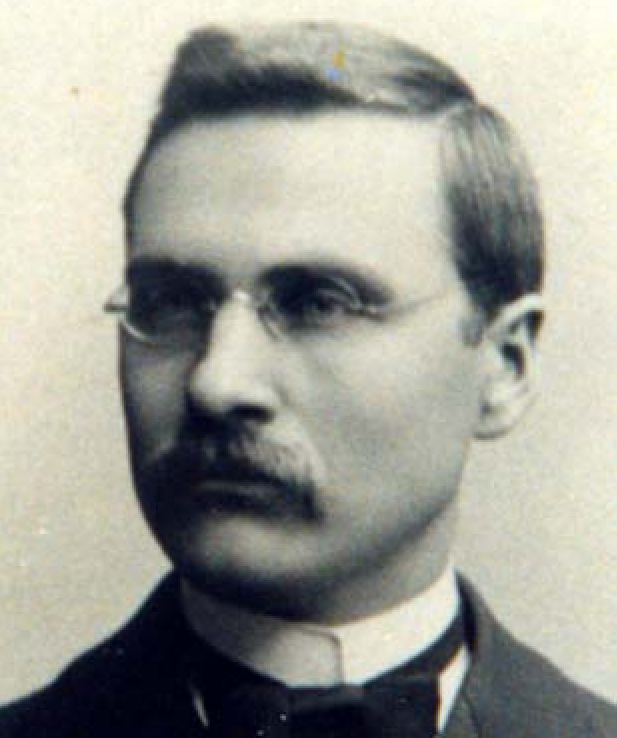
Rauno Näränen, 1971, Finland.
Professor Rauno Näränen 's thesis (1976), published in General Journal of the New Folkloristics Issue No. 13, discusses Seŭlga extensively. Professor Näränen mentioned that he had the opportunity to enter the place with a graduate student, Kyllikki Nykänen. He wrote: “The Soŭl hamlet dwellers are simple and caring. They do not sway with the tide of outside modernisation, keeping their traditions and slow pace of life. Despite this, their harvests consist of very little compared to other villages.” Due to Professor Näränen's records, the Foundation could obtained valuable insight into the Seŭlga, but still had no means of physical entry to the village.8 The only clue was Hampyŏng Cattle Market, the location where he claimed to meet the Seŭlgaites.
After two days searching the Ham-pyŏng Cattle Market, we finally met a Seŭlgaite. The man, who went by the name Pak Yung(박융, 朴融), accepted our request to visit his village after brief hesitation. We returned the next day as he requested and met two other men from the hamlet. Both were born and raised in the hamlet and kept livestock, who drove us to their village. I tried to track out route using GPS, but at a certain point, all our electronic gadgets stopped working, including mobile phones and laptops. The phone and laptops started working again after entering the village, but we still could not send our coordinates to the Foundation.
About 70 people lived in the Soŭl hamlet, which had a noticeably younger population than other crofting settlements. Some pursued their family business of crofting or herding, but the Seulgaites reported that many others moved out to cities in search of jobs, so we estimate there are more Seŭlgaites than those present in the hamlet. The most noticeable point was their relationship with the outside world. In terms of doctrine, Seŭlga falls into the Proto-Sarkic category; however, they have experienced far more years of interaction with the outside world than years of outright isolation. Modern Seŭlga communities do not shun contact with the outside world due to their historical experiences, and they were still wary of outsiders visiting them. I was graced with a nine-day stay.
The first Sarkic feature we noticed in the Soŭl hamlet were unidentified SK-BIO organisms used for drawing a plow. According to the men who drove us here, the creatures were from non-anomalous cattle (Bos taurus), which compose the majority of the cattle population in the hamlet.9 Healthy calves are used for milk, meat, and breeding, while unhealthy or weak calves are grown into an SK-BIO organism. The resulting lifeform is reportedly tame and compliant, and very efficient.
Twenty metres away from Soŭl hamlet's entrance, there is Mong-ŭn Temple(몽은사, 朦誾寺), the only remaining Seŭlga temple. The temple is comprised of six buildings: the Hall of the Greater HeroDæ-ung-jŏn (대웅전, 大雄殿)10, the Hall of the Great Serenity and Light Dæ-jŏk-gwang-jŏn (대적광전, 大寂光殿)11, the Hall of the Paradise Gŭk-rak-jŏn (극락전, 極樂殿)12, the Hall of the Universal Penetration Wŏn-tong-jŏn (원통전, 圓通殿)13, the Hall of the Healer Yak-sa-jŏn (약사전, 藥師殿)14, and the Hall of the Jinin Jin-in-jŏn (진인전, 眞人殿).15 The temple is used as a school to teach Seŭlga doctrines to young Seŭlgaites, and also serves as a banquet hall for communal observances. Only the Jinin and the Bhadantas can live here. The current residents of the temple are Jinin Myŏnghyŏn, Bhadanta Gwan-jo(관조, 觀照) and Bhadanta Si-myŏng(시명, 是名).
According to Jinin Myŏnghyŏn, the building of the Hall of the Greater Hero is crafted with the body of the former Seŭljinin Wŏn-gwang(원광, 圓光). It appears that the bodies of the Jinin or respected ones are used as materials for the building. The Jinin added that other halls are built with livestock such as cattle or horses. Despite its lack of modern equipment, the building can illuminate its interiors and open its windows following the Jinin's operation. Such functions are presumably achieved with fleshcrafting.
Organisms used as building material are biologically dead, unlike other SK-BIO 005 usage of other cults. The Jinin commented on this that it is simply "excessive" for a being to live forever as a structure. If a person wishes to donate their body, they wait until their death is imminent and start the process then to allow the deceased to leave this world in comfort. The same applies to livestock.
The relatively large number of Jinins makes the influences of individual Jinins not absolute. Unlike other Sarkic orders, Seŭlgaite Jinin resembles a Buddhist abbot rather than a cult leader. Most Seŭlgaites I met showed respect and followed the Jinin but naturally agreed that they would do the same to other contemporary and future Jinins. Such thought is not considered disrespectful nor unnatural.
From a traditional Foundation's perspective, it can be said that Seŭlga takes the form of a collective leadership system consisting of multiple Karcists and Võlutaars. Stemming from this fact, some claim that Seŭljinin Chŏyong is the "only" Karcist leading Seŭlga de facto, and other Jinins correspond to Võlutaars de facto. However, there is an evident difference between the Jinin, the Karcists de jure, and the Bhadanta, the Võlutaars de jure. And the most revered Seŭljinin Chŏyong, who called as the Greater JininDæ-jin-in (대진인, 大眞人), and other Jinins are only marginally different, in terms of religious hierarchy.
Audio log
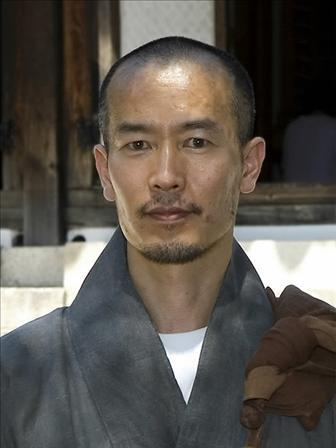
Record Date: 2017/05/30 @ 19:00
Interviewer: Dr. Yi Myoyeŏng
Interviewee: Jinin Myŏnghyŏn
Foreword: After about six hours since entering the village, I was allowed an interview with the Jinin after dinner. The villagers didn't seem uncomfortable with my request. The jinin, the person with the highest religious rank in the hamlet, was waiting for me in Mongŭn temple's Hall of the Greater Hero.
[Start of transcript]
Dr. Yi: Nice to meet you, Seŭljinin Myŏnghyŏn. Should I call you Jinin Myŏnghyŏn, or-
Jinin Myŏnghyŏn: [Chuckles] Just "Master" will be fine. I am nothing but a monk. I hope you found the dish well.
Dr. Yi: Couldn't be more appetising. Thank you for your hospitality and also for agreeing to meet me. I presume it was not an easy decision to let an outsider in the hamlet. To be frank, I expected the community to be more exclusive.
Jinin Myŏnghyon: [Subtly smiling] Our hamlet is not a hermit settlement in secrets. It is just that we are not under the jurisdiction of any local governments in Korea. There were occasional visitors aside from you, all of whom received what they desired. Our Greater Jinin also had been an outsider, hence the Seŭlga people know not to dare reject wandering travellers.
Dr. Yi: I see. Oh, I was going to ask you about the "Greater Jinin." The villagers told me that the Greater Jinin means very much in the local culture. Can you tell me about this entity — or this person?
Jinin Myŏnghyŏn: Indeed I can. [Brief pause] Our Greater Jinin is the first to spread Seŭlga onto this land. As a disciple of the BhagavatSe-jon (세존, 世尊),16 he learned the way of the Seŭlga with four Great Arhats and other Dharma brethren under the rule of Jeba State(제바국, 提婆國).17 But the Bhagavat lost his DharmachakraBŏb-ryun (법륜, 法輪), and instead lifted the SuvarnachakraGŭm-ryung (금륜, 金輪) up to be the Suvarnachakravarti(전륜성왕, 轉輪聖王).18 and threw himself into the fire of retribution against the endless turmoil. Chŏyong, deplored and left him, brought one bhadanta and two brethren to the realm of Silla, after a stay in Gwi-san Fortress(귀산성, 貴山城). That's what had been recorded on the Scribal Records of the Three Kingdoms.Sam-guk-sa-gi (『삼국사기』, 三國史記)
Dr. Yi: Do you mean the Chŏyong mythology contained on the Mirabilia is also true? There it records that the dragon, pleased by the Manghæ Temple, brought along its seven sons, of which the youngest, Chŏyong, followed King Hŏngang. Also, there is the story of him, his wife, and the pox demon.
Jinin Myŏnghyŏn: Every mythology is a statue sculpted out of history. The legend of our Greater Jinin is no exception, only it has some truth hidden behind the veil of parables and symbols. Let's take the story about his wife and the pox demon, for example. As you recalled, the Mirabilia depicts a story of our Greater Jinin's wife, who committed adultery with the pox demon. Chŏyong, who seen it, sang, “Two of the legs belong to me, but whose are another two legs?” Then the pox demon, repenting, promising never to enter anywhere with his image. That story lived on to future generations, and the portrait of Chŏyong became a symbol of warding off evil and embracing goodnessByŏ-sa-jin-gyŏng (벽사진경, 辟邪進慶).
Dr. Yi: That was awfully detailed.
Jinin Myŏnghyŏn: [Laughter] Because it's a story I've heard since I was very young. There are a few but essential modifications to that story. For instance……, Chŏyong's wife was not his wife, but the Bhadanta who followed him.
Dr. Yi: Bhadanta, you say? Does that mean…… the Bhadanta caught smallpox?
Jinin Myŏnghyŏn: That is… not the case, no. She had committed adultery with the pox diety. Her name is Bhadanta Nahksatihaar, better known by her nickname, "Deer-legged Lady."Nok-jok-bu-in (녹족부인, 鹿足婦人)19 She was the highest advisor of our Greater Jinin…… with ample knowledge and understanding of the doctrine and embracing the ill and the untouchable with endless empathy. However……, she was seduced by the pox demon to betray our Greater Jinin. Chŏyong defeated the pox demon and her followers and retrieved his Bhadanta.
Dr. Yi: Pox demon……. So, this entity was some sort of evil spirit? Would you mind elaborating?
Jinin Myŏnghyŏn: [Brief pause] They were followers of a high matriarch of the Jeba state, comprised of three exiled Jebaite aristocrats and a man from Silla. They're told to wander around Northeast Asia, spreading pox as they go. There is still a shamanistic ritual worshipping them.
It was a fierce battle. Her followers were strong, and the evil Jebaite jealousy derailing them from ĀryāmārgaJŏng-do (정도, 正道). The Great Jinin warned…… that joining Seŭlga is not just following the Sila and VinayaGye-yul (계율, 戒律) and the teaching of the ancient sages, but also walking the path of apotheosis and mokṣa by ourselves. Which her followers failed…….
Dr. Yi: Hold on, are you saying the pox demon's followers believed in Seŭlga?
Jinin Myŏnghyŏn: Misguided, but yes.20 [Long pause] For your own good, I have to warn you not to ask about the pox demon's clique anywhere else in this hamlet.
Dr. Yi: How so?
Jinin Myŏnghyŏn: [Brief pause] I don't want you to get hurt, doctor.
Dr. Yi: I…… see. I'll keep that in mind. Then, on to the next question. What does the legend recorded on the Mirabilia mean? The dragon of the eastern sea and its seven sons…….
Jinin Myŏnghyŏn: [Short silence] It means his long struggle. The inescapable pain of his bloodline……, the anguish of the shaped……, those are his torments, which we…… cannot dare discuss so lightly, especially when it comes to him……. [Long silence]
Dr. Yi: My apologies. When did Jinin Chŏyong pass away? I wasn't able to find records about him after the legend.
Jinin Myŏnghyŏn: [Grins slightly] How could our Greater Jinin pass away? He was taught by the Bhagavat himself. Death cannot affect him. [Sighs] However, such immortality caused him even heavier Kleśa. He realised the cease of mortality does not mean breaking the fetter but instead being trapped into another fetter. The sight of crofters21 rotting alive……. Witnessing them drove our Greater Jinin into sadness.
Dr. Yi: So, it means that Jinin Chŏyong still lives.
Jinin Myŏnghyŏn: Because he is different from other Jinins. His immortality is…… a yoke…… burdened upon him to protect Seŭlga.
Dr. Yi: Excuse my discourtesy, but is that the only difference between your Greater Jinin and other Jinins, who became the Jinins after the founding of Seŭlga?
Jinin Myŏnghyŏn: In what manner?
Dr. Yi: Position……, or such. Actually, I was curious if…… the Greater Jinin was leading Seŭlga.
Jinin Myŏnghyon: You can think of that this way: his relationship to us is the Bodhisattva's relationship to the ascetics. [Brief pause] He vowed to save all lives and lead them to Ikunaan, and Jinins like me were raised to achieve that aspiration. Our Greater Jinin is celebrated as the initiator, but only that; his words are respected no more than ours. There's this saying: "Blind faith is a leash that leads all to Kleśa."
Dr. Yi: Are there any Jinins after the Greater Jinin who achieved or pursued immortality?
Jinin Myŏnghyŏn: There are quite a few who tried… but only to die. They did live slightly longer than ordinary folk, but what meaning does prolonged life has when you cannot be truly human? Every single one of them turned to resemble Māra…… and finally their minds collapsed, corrupting to less than human. Some of them became bloodthirsty monsters, and some tried to contact Māra to exploit their power.
Dr. Yi: What happened to them?
Jinin Myŏnghyŏn: [Light grin] Those blinded by greed wreak havoc to all. We cannot allow a former Seŭlgaite to cause pain, so we return them to the cycle.
Afterword: Just then, the great bell signalling afternoon prayer rang, and I stepped out of the Hall of the Greater Hero after thanking the Jinin. The story of Chŏyong that I gathered from this interview is quite interesting. I can now know where the tranquil atmosphere of the Soŭl hamlet came from. Also, this was an excellent opportunity to know how much Seŭlga interfered with non-anomalous history. The last bit of information is significant, as there are seceders despite Seŭlga's negligence of immortality and power. Do all Sarkic cults have people that contact Archon to quench their thirst for greater power? Nevertheless, I asked the exact meaning of “returning them to the cycle,” but got no answer.
My conclusions go against the traditional view of the Foundation, but I think the division of Chŏyong, a traditional Karcist, and other Jinins cannot accurately reflect the structure of Seŭlga. Seŭlga's peculiarity surely will bring about some controversy, but the inner power structure has a stark difference to other Sarkic cults. Hence, trying to fit Seŭlga into the Foundation's original mindset may lead to some misunderstandings.
Further research revealed additional information about Seŭlga's unique art of sigils, related to the legend of Chŏyong and pox demon. As the legend suggests, their art of sigils specialises in the protection and warding off.
Seŭlgaite art of sigils follows three basic steps. First: one prepares paper, blood, and a brush. What animal the blood comes from is irrelevant, but it is thought to have mainly originated from the users themselves, or cattle, chicken, or pigs. Second: the user draws Chŏyong's face with the blood. It is essential that the user accurately depicts his auspiciousness. In modern terms, it is putting an emphasis on implementing the algorithm of thaumatological warding. Third: stick the portrait on the door, and paint the top with blood.
Chŏyong's face known to the modern world is thought to have undergone multiple changes. This is thought to be because the other people tried unsuccessful imitation of Seŭlgaite art of sigils, which is based on hemomancy; therefore, only Seŭlgaites can use. Examples of the early modern usage of the art have also been observed. For example, there are multiple records of Seŭlgaites distributing genuine portraits of Chŏyong to the public to combat the rapidly spreading epidemic during the great famine of 1670.
Soŭl hamlet does not celebrate special Sarkic observances. Rather, it celebrates traditional Korean observances, with one addition. May 11th on the lunar calendar is the “the Feast of Jinin Advent,”Jin-in-do-ræ-il (진인도래일, 眞人到來日) celebrating the day when Chŏyong's first arrival on Silla. This day is the most important observance for the Seŭlgaites along with lunar new year feastGu-jŏng (구정, 舊正) and autumnal harvest feastChu-sŏk (추석, 秋夕). Seŭlgaites prepare this observance for about a week, and Seŭlgaites living outside returning their hometown can be seen in this period.22 I was fortunate enough to observe the observance one day after arriving.
The Feast of Jinin Advent continues from morning to evening. People spend time with their families from morning to lunch. After lunch, they join the Mass-like ceremony held at Mongŭn temple. The ceremony is called “Jinin Bodhimaṇḍa,”Jin-in-do-ryang (진인도량, 眞人道場) which lectures their Sutra. After the ceremony, people gather at the town centre to enjoy various traditional activities.
After dinner, the residents gather at the temple again. Another ceremony, held from around 7 P.M. to 12 A.M., is called "Upasampadā Dharmasaṃgīti." Su-gye-bŏb-hœ (수계법회, 受戒法會) This event is the coming-of-age ceremony and approval ceremony to be regular Seŭlgaite brethren. It is mainly attended by Seŭlgaites who become adults.
Video log 0145E-1024
Record Date: 2017/06/05 @ 21:00
Recorder: Dr. Yi Myŏyŏng
Foreword: Video of the last stages of the Feast of Jinin Advent.
[Start of transcript]
Four people are kneeling in front of the stairs of the Hall of the Greater Hero. Those four people are town residents who became adults this year. There used to be more younger people attending the Upasampadā Dharmasaṃgīti — there were about 10 to 20 people in the 70s — but this year, there are only four.
The yard where the Dharmasaṃgīti is held is full of town residents. People returning to celebrate the feast make the place more crowded. On the right of the screen, an old man wearing traditional Korean attire can be seen in a group of people. He is Seŭljinin Ji-chŏn(지천, 知天). Four unidentified entities stand upright behind him. They are thought to be halcosts of Jinin. The residents gathered to see the ceremony are not afraid of them: instead, they even seem to show awe.
Soon, the ritual starts.
Jinin Myŏnghyŏn: First, thank you all for attending. We've gathered here to celebrate the new adults of this town. Pak Tæ-Hyŏn, son of Brethren Pak Jong-sin and Kim Myŏng-suk, Ahn Yu-ra, daughter of Brethren Ahn Sang-Jin and Yi Hŭi-jŏng, Chœ Ji-Hun, Son of Brethren Chœ Jin-wŏn and Gang Mi-hye, Pak Hye-yun, daughter of Brethren Pak Jong-hŏn and Kang Yun-hŭi. Please give them a warm round of applause.
The four rise and greet the people around them. All four are wearing traditional Korean attire, and their heads are shaved, regardless of gender. The attire does not seem to be made with common materials. Instead, it is similar to that of Sarkic clothing. The clothing of one celebrant has veins protruding out of his sleeve.
Jinin Myŏnghyŏn's halcosts pass cups of jin-chung-ju(진충주, 珍蟲酒)23 to the celebrants. They all drink it at once and kneel down again.
Jinin Myŏnghyŏn: Will you endlessly participate in the study of the Seŭlga way, the sense of flesh, and the will for enlightenment?
Attendees: Our Greater Jinin knows that I will.
Jinin Myŏnghyŏn: Dear crofters of flesh! Will you bear the burden of others? Can you break free from Māra lurking deep in humans? Therefore, Duhkha, Samskara, Vidya and Nivartanīya are no different, as Duhkha causes Samskara, Samskara unveils Vidya, Vidya births Nivartanīya, and Duhkha reappears from Nivartanīya. the Moha onesU-chi-ja (우치자, 愚癡者) calls it continuum, but the Ox-herderMok-u-ja (목우자, 牧牛者) calls it quaternity. Can you accept and keep this?
Attendees: Ahrat Noadæŭl knows that I will.
Jinin Myŏŏnghyŏn: Dear young postulants! Obsession is the path of curse and corruption; as Jeba fell from such, the deathless empire also fell from such! Can you face the sin of excessiveness which your flesh directs? Can you shake off whispers of little Māra nesting beside infinite human potential? Do not forget, all life is interconnected, so all can go to the pure landJŏng-to (정토, 淨土). Can you accept and keep this?
Attendees: Ahrat Nædoji knows that I will.
Jinin Myŏnghyŏn: Dear my beloved pupils! Do know that blind faith is a leash that drags all to Klesa! Face the realities of the commandments look adamant, and the fences look hardy enough. Beware of the scoundrels that call the greed and sins of our predecessors as commandments. Our flesh shall empty our old Saṃkleśa, as the swamp of hasty conclusions is deep! Can you accept and keep this?
Attendees: Ahrat Oŭlji knows that I will.
Jinin Myŏnghyŏn: Dear friends who shall march! Witness the Māra that corrupts the Sattva and pushes them into sin. They had taken various forms, even when Chŏningyosa enlightened the Sattva. Can you recognise the wretched hiding among us? Can you lead your close ones to a world of absolute joy? Pain is Māra's feed, so do not let Māra be you when you face Māra in times of tribulation and danger. Can you accept and keep this?
Attendees: Ahrat Saŭlŭn knows that I will.
Before the Celebrates can finish, some of the gallery chant "We shall not forget!" and "We shall Remember!" I ask surrounding brethren about all this noise, but nobody respond. The attendees seem to be unresponsive.
Jinin Myŏnghyŏn: Will you practice all you've learnt in your life and participate in endless study and learning? Will you study to find the truth and lead the Sattva to the pure land?
Attendees: Chŏningyosa knows that I will!
Bhadantas enter the Hall of Greater Hero and exit with jars full of Jinchungju. There are four jars, one for each of the attendees. One by one, the attendees walk out, grab the jar and drink. This order is seemingly chosen in advance. By doing this, the attendees let the Akuloths inside their bodies. Immediately, the Akuloth turns active.
Jinin Myŏnghyŏn: [Loudly] Praise Sejon! Perform the song of Chŏyong!
The attendees exit to the left of the Hall of the Greater Hero and prepared traditional instruments such as janggu, gŏmungo, buk, ggwængwari, jing and dægŭm to play Chŏyongga. Most musical instruments seem non-anomalous, but the janggu and gŏmungo seem to be made by flesh-shaping, judging from their appearance. The instruments are considered as “old relics.” Initially, other instruments were made with flesh-shaping as well, but IJAMEA stole the dægŭm, and other instruments were lost during the Korean war.
"Chŏyongga" sung here is based on a Goryŏ song with the same name. The Goryŏ song "Chŏyongga" was based on Chŏyong legends aforesaid, and thought to hold incantatory powers. In Seŭlga community, "Chŏyongga" is one of the most commonly performed tunes in rituals.
When the song is about to end, the four attendees reappear. The camera closes upon them. They wear spun silk tabby clothing dyed with the five cardinal colours and hold a giant mask on their right hands, known as "Chŏyongtal." The attire and mask are clearly made with the Lihakut'ak of Seŭlga. According to villager, the mask fits perfectly to the wearer. Also, it is typical for the mask to connects its consciousness to the wearer. For these reasons, the mask is considered relatively more important. The attendees stand in the middle of the yard. Bhadanta Simyŏng changed to the same clothing and join them, to match the five headcounts.
The attendees simultaneously wear the mask and soon starts performing Chŏyongmu. Chŏyongmu is the dance passed down alongside "Chŏyongga", as a court dance of Josŏn. Seŭlga's Chŏyongmu is more intense and dynamic compared to the recorded version. Most times, this trait stems from their use of hemomancy. The video records various instances of the attendees practising flesh-shaping, most of them being unique to this particular sect.
After the dance, all the residents, congratulate the attendees loudly. The attendees respond to the residents with a deep bow.
Originally, the end of Upasampadā Dharmasaṃgīti ritual was different. The attendees had taken a rest after they dance, and at midnight, they went outside to hunt "the pox demons" in their designated area. "The pox demons" are then brought into the hamlet by Seŭlga's original primitive soul trap and then were sealed or extinguished. It was around the mid-1970s when the last part of the Upasampadā Dharmasaṃgīti disappeared. No more cases of smallpox appeared in Korea after 1960, and other epidemics also decreased as medicine developed. Therefore, the power of "the pox demons" diminished; hence, hunting those entities was not seen as essential anymore. There are a few who still enjoy hunting them, but such cases are rare.
I was provided with a detailed explanation at I-mul-dang(이물당, 異物堂), where artifacts used for various rituals including Upasampadā Dharmasaṃgīti is stored. I was able to examine the weapons that had been used for "the last part." The weapons, forged and smelted the Sarkic way, were not limited to simple backswords and included other weapons such as bows, flails, and maces. The weapons were in pristine condition, further backing the claim that unofficial hunting is still practised. It seemed as less than a week passed after these weapons were treated.
Staying in the hamlet, I was also able to gather various myths not discovered outside, the most notable one being "the Story of the Mother Dragon and Her Seven Offsprings". This Soŭl hamlet child's tale seemed so famous that every Seŭlgaite has heard of it. The Seŭlgaite version of the Valkzaron contains the earliest edition of this story. What's notable is that the story is only marginally different to the modern Seŭlgaite version.
The story is as follows:
Long long ago, a dragon lived high up in the heavens. The dragon was ancient, giant, and evil. All day long, every day, the dragon looked down at the mortal world and pondered how to harass and devour humans.
The dragon had seven offsprings. The first six was strong and powerful, just like their mother. They also had mystical powers. They were fierce like their mother, too, so they too hated humans and wanted to devour them.
However, the youngest was peculiarly weak. He too was fierce and hated humans just like his mother, but unlike his siblings, he could not descend onto the earth to harm or make mischief on the humans. So the youngest had nothing to do except stay in the heavens, looking down at the humans.
The youngest watched the humans for a very long time. He saw them being born, growing, loving and ageing. He also saw them trapped in pain. He also saw lovers and enemies. He also saw the leashing cycle of birth — growth — illness — and death. He stayed up there watching the humans for so long that the humans thought the dragon had only six offsprings.
As time had passed, there was a change in the youngest's mind. A ray of good sparked inside him. He wanted to live with the humans, with everything alive, with their energy: though the spark was too subtle for him to didn't notice himself.
Then one day, the mother dragon called the youngest out of the blue and told him, "It has been centuries since you have lived with me because you are weak. But it's high time you wreak havoc on the humans on your own. Here, I grant you my powers. Descend onto the Earth.
The youngest also wanted to, so he tried to accept her offer readily. However, something unexpected happened: the son's head shook on its own. The mother dragon furiously shouted: "What are you doing? Can't you accept my powers? Are you saying you cannot descend onto the earth?"
The youngest started speaking. The good thought had taken over his mind unnoticed. He said: "No, dear mother. I want to descent onto the earth. However, I do not want to do anything evil. I want to dwell with the humans."
Then the youngest told what he saw. People, and all the unique creations of people, and the emotion of happiness, anger, love, joy, sorrow, hatred and greed.
The youngest felt his vigour and power growing as he spoke. He realised that he is not himself who envied his older siblings wreaking havoc on the humans. The youngest was truly free.
However, it was no match for the mother dragon's wrath. The mother dragon pushed her youngest son with the very power she was going to give, and he fell down helplessly. Alas, when the son hit the ground, his body shattered into pieces and was scattered around the world.
It is unknown what metaphor the dragon and her seven offsprings is, but I was able to reach the conclusion that they are the same entities that are recorded in "Mr. Chŏyong and the Temple of Manghæ." I asked the residents, Jinin and Bhadantas, but they only gave vague responses or evaded the question.
Eventually, without a clear answer, I was forced to leave the hamlet three days after the Feast of Jinin Advent, as promised in advance,
Audio log
Record date: 2017/06/08 @ 10:02
Interviewer: Dr Yi Myoyŏng
Interviewee: Bŏpu Pak Yung
Foreword: Leaving the hamlet was not easy. The method to exit was not difficult, but it was hard for me to swallow. I had regrets about still not knowing Chŏyong's identity, even after staying in the hamlet for several days. The residents were saddened by my leaving as if I was one of their own.
I said my goodbyes to where I stayed and told them I was returning to //Mongŭn temple. I decided to hitch a ride on a family's car, returning home outside. That was when I met the first Seŭlgatie that I met, Pak Yung.//
[Start of transcript]24
Bŏpu Pak: Aigo, you leaving?
Dr. Yi: Yes, I suppose so. [Brief pause] By the way, I couldn't find you at the ritual. Maybe it was too crowded…….
Bŏpu Pak: No, I didn't go there, actually. I have never liked it.
Dr. Yi: Oh…….
Bŏpu Pak: Well, you're leaving now, but I'm not sure if we were helpful for your report or not. [Laughter] This is also a Nidana, so if you haven't found anything yet, please ask me.
Dr. Yi: No, Thank you. I got everything I need. [Long pause] Well, then, there's only one. Do you know what does "the dragon and seven offsprings" mean?
Bŏpu Pak: Within the Chŏyong mythos on the Mirabilia?
Dr. Yi: That and also the folklore tale: those two are so structurally similar……. Everyone seemed to stay quiet about this similarity. Though, I assume everyone knows the truth, right?
Bŏpu Pak: Everyone, Including me, you are saying.
Dr. Yi: You and the others as well……. But now, you're the only rope left for me.
Bŏpu Pak: [laughs loudly] Well, I hope I am pretty stout cordage.
Dr. Yi: Can't think of any stout better.
Bŏpu Pak: All right, all right. You don't need to butter me up. [Brief pause] The dragon and her offsprings, you say? What do you want to know about them? Their identity?
Dr. Yi: I'm curious how Chŏyong is related to these symbols. Yes, and their identity, too. What they imply…….
Bŏpu Pak: "Imply" is a bit ambiguous, in my opinion. That tale should be taken literally. "The mother dragon and her seven offsprings."
Dr. Yi: So, you mean Chŏyong really is the dragon's son?
Bŏpu Pak: Haha, how should I put this……. [Long pause] Those of the Xia bloodline call the Mother Dragon "Yŏ-wa."25
Dr. Yi: Huh……? What are you me —
Bŏpu Pak: I mean, the dragon is Paranimmitavaśavatti Māra Pāpīyās herself, that's what I'm telling you. And her litter are Māra.
Dr. Yi: So you mean Chŏyong is an Archon, I mean, Māra? But the tale says that the seventh Māra fell to his death…….
Bŏpu Pak: Fell to his death, FELL TO HIS DEATH! [Laughs loudly] Yond maketh me bethink yond way. However, how couldst a Māra beest did grant such fate? As those ones art beings did tie to the leash of immortality!
Dr. Yi: Your words…….
Bŏpu Pak: Ah, sorry. You amused me, doctor. [Pause] The seventh Māra did not die, actually. That folklore is not another symbolism or metaphor, nor an abstract portrayal of reality like other myths. That is true as it is, just like blood cycling through your body, doctor.
Dr. Yi: I don't get what you me —
Bŏpu Pak: The latter part of the tale was cut away. The seventh offspring crashed to the ground and was shattered, but that was not the end of it. Each shard shaped itself into a new form. The good mind that possessed him took the biggest shard.
Dr. Yi: Wait, so do you mean that Chŏyong is really an Archon……, I mean, Māra?
Bŏpu Pak: [Chuckles] I told you, doctor, to take it literally.
Dr. Yi: B-but, I have never heard of there being seven Archons.
Bŏpu Pak: Doesn't the folklore tell you? The seventh was forgotten from long, long ago, as a cancer cell goes under the radar before it spreads……. [Short pause] What an exhilarating positive! A son, standing against his mother, can you imagine how surprised Māra Pāpīyās would have been?
Dr. Yi: Other Nälkä scripts do not record anything like that. If what you're telling me is true, an Archon descended to this earth and joined those who opposed himself, and that's…….
Bŏpu Pak: You scholars love to reason, and I do not run away from it. “Beware of the scoundrels that call the greed and sins of our predecessors as commandments” ……. Your methodology is no different from ours. And yes, so, you are wondering why Māra would do such a thing.
Dr. Yi: Exactly.
Bŏpu Pak: I could tell you to understand it literally, but that will be hilariously forcing you to. So, I will answer you as sincerely as possible.
[Brief pause] Do you remember what I said, the crushed Māra's body? A shard must be definitely weaker than the whole. Plus, the seventh was the weakest Māra — in your words, Archon. We must recognise the existence of the good thought struggling inside that horrendously weakened flesh.
One can say it was a miracle to meet Bhagavat, born with such a weak body in harsh times. At that time, Bhagavat was preaching wisdom at the Jeba state, far away. Chŏyong thought what Ion told is the true way to save the people, and defeat his evil siblings and mother, so he followed the Śāstāmanusyānāṃ.
It is the power of insurgency that runs through our bloodline. I call it defiance. We have the power to defy all evil deed and Klesa. You, the Jinin, even a child in that hamlet, everyone does. We can also teach the ability to pass on what we have learned, not only with words but also with actions and figures.
That is what touched the seventh offspring, Chŏyong's main body. He was born a Māra but was purified and shaped himself again, to a new flesh that would empty the old Saṃkleśa. Do you understand now?
Dr. Yi: Then, what happened to the other Shards? Did they change too?
Bŏpu Pak:[Nods] However the good spirit cannot possess them, unlike Chŏyong. The evil mind before remained, making them do evil. What is the pox demons? Must be other scattered shards of Māra. However, they are nothing but small cullets. The bigger ones are much stronger and much more nefarious.
Dr. Yi: Does anyone know where they are?
Bŏpu Pak: Nobody does.
Dr. Yi: Excuse my insolence, but doesn't your Greater Jinin retain any of that evil nature left?
Bŏpu Pak: [Chuckles] It's not insolence. Don't have to excuse. [Brief Pause] What we have to discuss here is the TRAITS of Māra, or what you call Archons. THAT Māra was clearly broken to pieces. But, do you think THE Māra was also broken? Tell me your thoughts, doctor.
Dr. Yi: "The" Māra?
Bŏpu Pak: The seventh Māra ITSELF. The seventh offspring, the consciousness and mind of the seventh Archon, and — if such a thing exists — its soul. What do you think would have happened to them?
Dr. Yi: I assume they were also split during being shattered…….
Bŏpu Pak: You gave the wrong answer. No, it did not. The notion that the seventh Māra itself is Chŏyong is far from the truth. How can I put this……. Would "Avatāra" be better for your understanding?
Dr. Yi: Please elaborate.
Bŏpu Pak: The existence of the seventh Māra did never split. Instead, it lurks deep in the consciousness of every single shard, trying to scrape itself together again. Those whom Māra Pāpīyās attack suffer the same fate: Māra Pāpīyās' true nature is dismemberment and dissipation, so their opponents have their figure shattered.
The seventh Māra, a traitor, suffered such a fate. And it still exists, constantly demanding to return his body, constantly, constantly screaming to take hold, even more so when the shards come close, to become one again……. merge into its past self……. That impulse…… sparks as blood get pumped through the body.
A Māra is a Māra, no matter what good thoughts it have. It is similar to all lifeforms with the nature of gods. The saying "the shakabuku is sudden,Don-o (돈오, 頓悟) but cultivation is gradualJŏm-su (점수, 漸修)" by Ji-nul(지눌, 知訥)26 is truly correct. However, the Avatars untouched by the good mind only harbor evil, pain and void, serving only its natural instincts unshedded.
Much more, what could it be to Chŏyong himself? I told you, a Māra is still a Māra. He also feels the shockwave of the seventh Māra, even far worse than other shards. That is the reason for our Greater Jinin's itinerancy, to fight against his other-selves and to shed the essence of his original self.
Dr. Yi: So, are you saying his absence is also because of that?
Bŏpu Pak: Before he left to dispose of his other selves, but this time he left, feeling the advent of Māra. One could say his blood surged through from his brothers' coming. [Laughter] Such a Māra nonetheless.
Dr. Yi: Ad — advent of Māra…… you said?
Bŏpu Pak: Fear not, doctor. Only fear itself deserves to be feared. And Māra is the beast that feeds on fear. Hence, pay it no mind.
Some may worry that his evil parts will edify Chŏyong, that he will recover his old appendages and rise again to stand proudly next to the six stars who look like the bedsores on this grim, dark cosmos. I know that your superiors, the brass people and the guardians of obscurantism will do worry. But you have my word — it will never happen. As he is fighting, meeting no one, thinking nothing, meditating……. Only to escape from it.
Dr. Yi: Brother, you are…….
Bŏpu Pak: ……Long ago, a man visited the original Soŭl hamlet. He did not come in search of wisdom like you did……. But you reminded me of him, searching for the hamlet. That's why I played the role of priming water after a long interval. Because of me, having a hard time, these people……. And I'm not even around them when they need me. [Pause] That's why some raged and some despaired. You saw the things Imuldang keeps, doctor. What did you see there?
Dr. Yi: S-swords……, weapons, attire……, the stuff used for Upasampadā Dharmasaṃgīti ritual.
Bŏpu Pak: They look like they've been used recently, right?
Dr. Yi: I was told that—, that's because of the occasional pox demon hunts —
Bŏpu Pak: They did not tell you the truth. [Brief pause] Hatred has power. Some hatred is passed on from generation to generation. All that terrible atrocities. The helplessness of not being able to do anything is the most humiliating experience that humans can experience……. Even if that heart anchored down like blood clots to cause pain……. [Long pause] That sword, those blunt weapons, all those weapons are used not only to hut the pox deities but also those who plundered the old hamlet. Many are paying the price…….
Dr. Yi: You people are killing former IJAMEA members? Haven't you taught to beware of the sin of excessiveness? That looks like excessive hatred — vendetta.
Bŏpu Pak: Doctor, have you heard the phrase: “kill one to save many”Il-sal-da-sæng (일살다생, 一殺多生)?
Dr. Yi: Isn't that……, the motto of the Blood-Pledge Corps, the Japanese fascist group?
Bŏpu Pak: In fact, it originates from a Buddhist text, Yogācārabhūmiśāstra. [Short pause] It refers to the great merciful act of killing one man to save the lives of many who might be killed by him and make stop the accumulation of his karma. I don't know what you think……. but they do that by hunting down IJAMEA.
Dr. Yi: Brother, that…… is nothing but a retaliatory crime.
Bŏpu Pak: A terrible retaliation indeed. However, we do never break their cycle. We just send them back, believing that they will pay off their karma in the next life. That is our Jaka. [sneeres] Ha, could that even have happened if Chŏyong stayed at the hamlet? If he stayed right beside his disciples, that could never have happened. If he stayed right beside them, there wouldn't still be such a big bruise on these people's hearts.
Dr. Yi: Excuse me, Brother —
Bŏpu Pak: Self-blame is endless and drives a man insane. [Long pause] I should go now. Ask the others, as you have nothing to learn more from me, and…….
Dr. Yi: W — wait!
Bŏpu Pak: When you face Māra in times of tribulation and danger, do not let Māra be you. At any cost.
Afterword: Bŏpu Pak walked away, and I met the family at the town entrance. They answered that they did not know about the jinin's identity or Māra's coming. Most of them seemed to be hiding some information from me, but some of them seemed oblivious.
However, what confused me the most was not those answers. When we got closer to our destination, I asked them if they know a person named Pak Yung well.
They asked me back: "Who is Pak Yung?"
There was no one named Pak Yung in Soŭl hamlet.
After the ethnographic research, I returned to Site-21K, Seoul and gathered papers. I was able to find valuable pieces from the Anti-abomination Guard RecordsI-gŭm-rok (『이금록』, 異禁錄), the anti-paranormality paramilitary agency of Josŏn Kingdom. the Records quotes a story on the Posthumous Work by Byŏk-o(『벽오유고』, 碧梧遺稿), the posthumous collection of Yi "Byŏk-o" Si-bal(벽오 이시발, 碧梧 李時發) (1569-1626 A.D.), who had not belonged to the Anti-abomination Guard, but whose great-grandson had. According to quoted story, Yi Sibal headed the Soŭl hamlet to meet his friend living there, and was guided by a resident.
And the resident was named Pak Yung.
Attached below is the document written by the Anti-abomination Guard about the Soŭl hamlet. According to the document, The Anti-abomination Guard tried to break into the hamlet on their own but failed.
The Disorder:Pæ-ran (패란, 悖亂) the Year of Black Goat,Gye-mi (계미, 癸未) Case number 2Je-i-ho (제이호, 第二號)
Description Sang (상, 詳) A hamlet of abominations located deep in the valleys of Mount Du-ryu.(두류산, 頭流山)
Person in Charge Dang (당, 當) Entrusted Lord No-ba(노바, 怒貌), the Anti-abomination Guard Inspector.
Conclusion Gyŏl (결, 結) Anti-disorder BattalionPæ-ran-sa (패란사, 悖亂司) tried to break in, but failed.
State of Affair Hyŏn (현, 現) Added to the secret records and closed the case.
Scholarly says:
Deep in Mount Jiri, also called Mount Duryu, is a hamlet called "Soŭl." This hamlet has been known as the land of the Hsien-jen(선인, 仙人). However, its true nature is a settlement of those who shape flesh and bone. The residents are of a very peculiar shape. According to the early records by Duke Chung-Ik(충익공, 忠翼公) Sibal, their blood vessels, skin and organs are different in number and shape from the common folk. There is a rank similar or superior to a chieftain, called Seŭljinin. This rank is mostly unknown, besides the fact that it is related to the school of Buddhism. How to enter the hamlet is unknown.
—[Addendum] We climbed Mount Duryu from early in the morning, accompanied by Anti-disorder Battalion. However, two whole days of searching didn't lead to a single house, let alone a hamlet. The Battalion grew to be nothing more than a bunch of exhausted troopers. And we could not give surrounding villages any more inconvenience to gather provisions; hence the search was terminated.
Several months after I left the hamlet, a previously unreported grotto was found in the middle of Mount ████ while securing SCP-████. Entry to the grotto failed due to attacks by what appear to be SK-BIO organisms, and the event was immediately reported. As soon as I got hold of the news, I planned to visit the grotto with several Site-21K researchers.
Reviewing the interview with the entity calling itself "Pak Yung," there must be somewhere Chŏyong residing toward his evil instinct off. I was very sure that the grotto is the place. Under permission from Site-01K, I headed to the grotto in question with MTF 乙-04 ("Hungry as a Grand Huntsman").
[DATA EXPUNGED]
[DATA EXPUNGED]
[DATA EXPUNGED]
Following the incident, MTF 乙-04 was found all perished, and two researchers were found unconscious. I was rescued but in delirium. I do not recall any events in the grotto, nor what entity I met in there. But there's one thing I remember; Chŏyong is not there. He left before my arrival.
Encounter with Pak Yung might have been a warning. He predicted we would find his hideout sooner or later. They told me that I mumbled “I am everywhere,” repeatedly when I was unconscious. Split and chasm. I might have gone through the state of the seventh Archon, attacked by Yaldabaoth.
The grotto naturally collapsed and disappeared later, as if it fulfilled its purpose.
The transformation of Nälkä into Seŭlga is thought to be as follows:
"Nälkä" can be broken into three syllables; Nä+l+kä. The "lkä" is phonetically transcribed as "乙加"Ŭl-ga. The "Nä" in the front sounds similar to the ancient Korean word "내"Næ, meaning "world", thus it is semantically transcribed with the Chinese letter "世"se, which means "world". During the Silla period, "世乙加" was most likely read as "Næ-ŭl-kæ". However, as time passed, Idu was forgotten, leaving only the phonetic transcription of the word, changing "Næ" into "Se", and "Kæ" into "ga".
Similarly, the name of Silla's first monarch has two methods of transcribing, "Hyŏk-gŏ-se"(혁거세, 赫居世) and "Bul-gu-næ"(불구내, 弗矩內). These also show the correspondence of "se" and "næ". In this case, as well, the closer reading of that time would be "Bulgunæ".
Source: SCP Foundation · CC BY-SA 3.0
Community rating
Was it worth the sleep you're about to lose?