An Anthropological Approach to Sarkicism - Case Study 03: The Darkwater Lodge
Act I: Et Ecce Equus Pallidus | In Memoria, Adytum << Case Study 02: The Divoši of Prague | Case Study 03: The Darkwater Lodge | Case Study 04: House Kurinuka >>
Act I: Et Ecce Equus Pallidus | In Memoria, Adytum
<< Case Study 02: The Divoši of Prague | Case Study 03: The Darkwater Lodge | Case Study 04: House Kurinuka >>
An Anthropological Approach to Sarkicism
Dr. Isabelle Beaumont, Department of Anthropology
Forward:
Our understanding of Sarkicism has changed dramatically over the last few decades. What we have learned has revealed a diverse and shifting paradigm far different from the monolithic creed that was first hypothesized. We are now able to paint a broader, more detailed picture of the Nälkä religion, its various sects and cultural traditions.
Modern sects are the product of divergent interpretations, many bearing a mere superficial resemblance to their ancient progenitor cult. Most unexpected, especially among early scholars of Sarkicism such as myself, are the seemingly benevolent intentions of its founders. The road to hell, it is often said, is paved with good intentions - an aphorism the Foundation must always keep close in mind, for despite the aeons between us, we gaze into that very same abyss.
And like the ancient Adytites, we have found it full of monsters.
Dr. Beaumont, a relative newcomer to the Foundation and to the research into the mysteries of Sarkicism and the Nälkä faith, has provided invaluable research into two new Sarkic cults. Her work in and among the peoples of the South Louisiana Bayou has yielded interesting results into both the Proto-Sarkic cult The Church of the Eternal Mother, as well as the Neo-Sarkic cult, the Darkwater Lodge. Presented here is the first of her reports.
- Dr. Judith Low, Senior Adviser at the Department of History - Religious GoI Threat Analysis.
CASE STUDY 03: The Darkwater Lodge
Eyô âng'ayô a ne viô - Eyô, which is God, multiplied itself like mushrooms.
Overview:
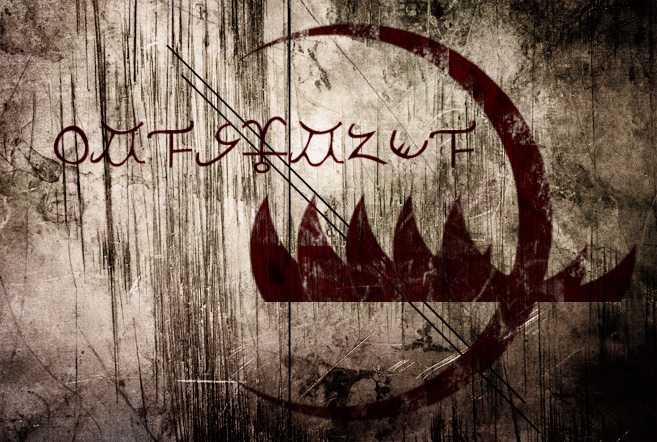
The sigil of the Darkwater Lodge.
The Darkwater Lodge is the modern moniker assumed by the long standing alliance and intermarriage between the two large Sabatier and Duvernay families. Originally from the Akan peoples of the area now known as Ghana, it is believed that the heads of the two families immigrated1 to the United States during the period of the transatlantic slave trade sometime in the late 16th century.
This group differs from most other Neo-Sarkic cults in that their principally Nälkän religious practices represent a fusion of Nälkä with other West African religious rituals. While this is superficially similar to how such beliefs form the core of more recent religious evolutions such as Voodoo and Santeria, the fusion that has given rise to the Lodge appears to have happened prior to the immigration of the Darkwater families to the local area.
History:
The original families of the Lodge first integrated with the Akan peoples sometime during the Sarkic Diaspora between 1200-1000 BCE. They represent a co-mingling of both haplogroup N (M231), a Y-chromosome DNA haplogroup typical of Northern Eurasia along with haplogroup L2a (mtDNA), which is more typical of western Africa.2 A majority of their own knowledge of this time period comes from oral traditions passed down from family head to family head, and much of the knowledge of their Adytite history has been lost along with most of their stories of their Akan heritage.
The progenitors of the Lodge arrived on the North American continent sometime between 1675 and 1695. The oral traditions are specific enough to pinpoint this time period, but only through comparison of similar progenitor folk stories that exist within other cultural groups that trace their existence to the same period. The earliest tales within the Lodge tell of violence and death on scale that is also substantiated through the record of various slave revolts and the subsequent military actions that were required to stamp them out. From these tales, we can ascertain that the group originally settled on the Caribbean island of St. John in the Danish West Indies under the leadership of an individual that is only referred to as Naman da ke Tsatsa.3
Their time in the West Indies was exceptionally violent. According to the same tales, as well as others collected from other cultural groups, the Lodge was primarily made up of Naman da ke Tsatsa and what we believe was their Halkost. They were involved in multiple slave uprisings and revolts, though it is of particular note that the goal of this original Karcist4 was the brutal murder of the white slave owners rather than the emancipation of the local slave population. There are numerous reports in both the Lodge's lore and in others that the Naman routinely used the local population to further their own desire to wreak havoc on the white landowners, and would do nothing to prevent the retribution meted out on the slave populations.
These violent and bloody actions culminated in the 1733 slave insurrection. Led by an Akwamu chief, King June, a foreman on one of the Danish estates, Naman and several other leaders were able to gain control of the majority of the island of St. John and proceeded to brutally murder the white population. The tales go on to say that this was insufficient to sate Naman's bloodlust, as the Karcist continued its rampage onto the slave population, murdering and raping a full third of the population before it was stopped by King June and a few others. What happened after is unclear, but the slave revolt was ultimately put down by several hundred French and Swiss troops sent from Martinique in April, 1734.
After this insurrection, the Lodge moved to the mainland and settled near the newly-formed city of New Orleans, where the Lodge remains to this day. There are not many tales from this time period, and it is unclear whether or not Naman da ke Tsatsa was fully recovered from its ouster from St. John.
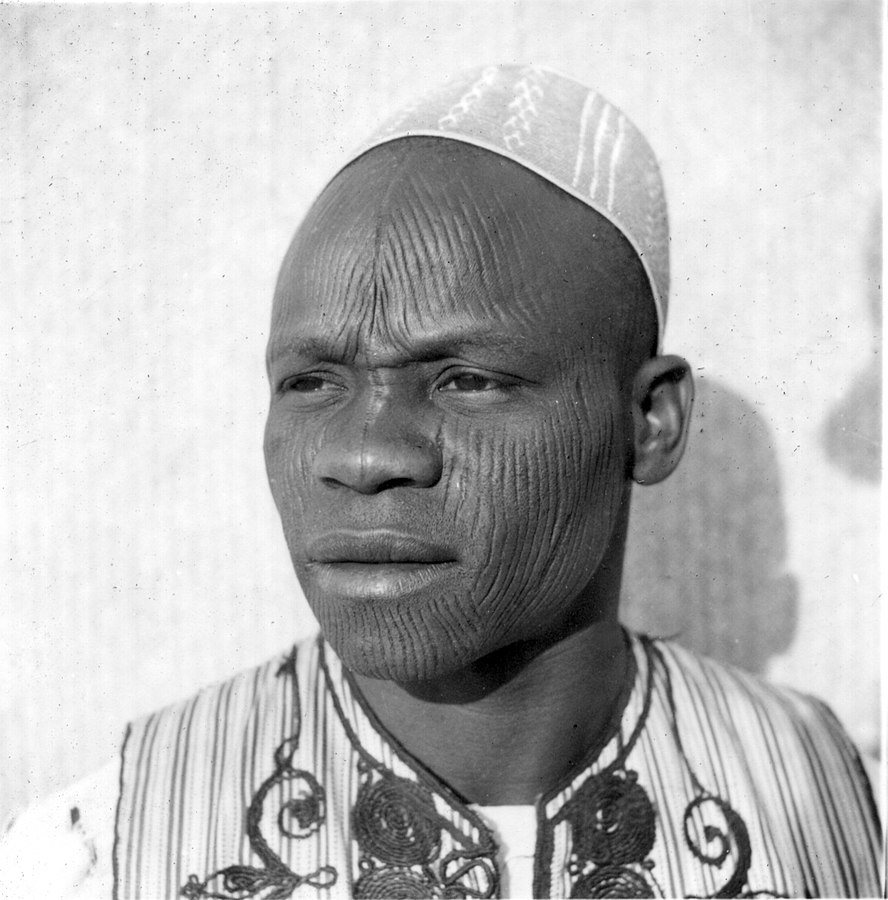
Karcist Enitan Sabatier.
What is clear is that at some point in the late 1700s, there was significant disruption within the hierarchy of the family group, resulting in the structure that we see now. Enitan Sabatier, the titular head of the Sabatier family, is the primary leading voice within the Lodge, and has assumed the mantel of Karcist for the cult.
This change in leadership is not much discussed by the members of the Lodge, but it has resulted in significant deviation from their original purpose. Largely, the distinction between what constitutes a "Neo-Sarkic" cult from a "Proto-Sarkic" one is not entirely applicable here. It is clear that the original leadership of the Lodge preferred the much more direct approach to apotheosis that is generally found in other Neo-Sarkic sects, but the current Karcist appears to operate with significantly greater discretion. As it stands, the Darkwater Lodge exhibits traits that is common to both classifications of Sarkic cults, though their past history has led the Department and through them the Overwatch Command to remain satisfied with its current classification.
Culture, Tradition, and Misconceptions:
The Lodge are all adherents to a religion that they refer to as Äkum'nälkä, or just Nälkä. While the majority of their closely-held religious practices bear significant resemblance to what we would consider mainline Nälkän religious practices, many of the names of their revered deities have been changed to or merged with traditionally Akom5 religious deities.
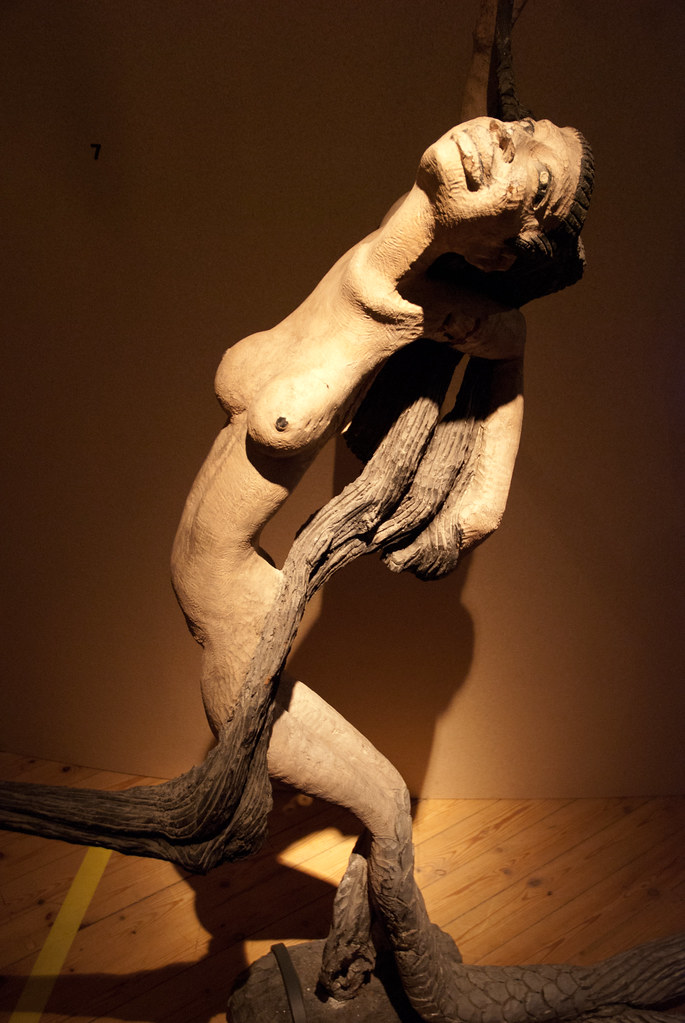
A statue representing the God(dess) Nyambe.
The primary pantheon of deities include:
- Nyamien - Their progenitor deity, Creator of the World. Typically depicted as an amorphous entity, with multiple eyes and mouths.6
- The ŋorok'si na Hargitsaa - The Seven Butchers of Chaos, the Fountains of Power. Daya, Biyu, Uku, Hudu, Biyar, Shida, and Bakwai.7
- Nyambe or Nyame - The first Human, Guardian of Creation, the Drafter of new peoples. Typically depicted as an elongated human with both male and female attributes. Some include the tail of a fish in the place of feet/legs.8
- Wasire - The God of the Dead, Judge of the Afterlife. Typically depicted as a powerfully built male with horns, grasping a shepherd's crook and wearing a crown.9
- Asaase Yaa - Wife of Wasire, Goddess of Death, the Knife of Judgment. Typically depicted as a feminine figure clothed in an occluding robe and holding a bared knife.10
The population of the Darkwater Lodge is currently made up of approximately 49 individuals. 22 members of the Sabatier family headed by Enitan Sabatier, 18 members of the Duvernay family headed by Enu Duvernay, and 9 lesser-ranked individuals who have joined the Lodge over the years. While Enitan and Enu operate as an exclusively married couple, their children remain independent members of the two separate families. While all of the Sabatier and Duvernay children claim to be progeny of the union between Enitan and Enu, they each carry genetic material of one or the other, not both. How this is achieved is currently unknown.
The entire population of the Lodge currently resides in a residential compound made up of two large Creole-style townhouses and three smaller outbuildings. All five structures are enclosed within an eight foot wall surrounding an 0.032 km2 area within the confines of the pocket dimension known as LoI-504 ("La Rue Macabre"). While it isn't clear when the Lodge compound was moved to La Rue Macabre, they have been long-term residents of both Rue Macabre and the region surrounding New Orleans, LA. They hold a place of regard among the citizens of Rue Macabre, and can often be seen interacting politely with them on Market Day. Of particular note is their ongoing peaceful relationship with the Mekhanics, a Cogwork Orthodoxy sect that also resides in La Rue Macabre.
Overall, the Lodge members practice their particular form of Nälkä in the relative peace and seclusion offered by their citizenship within La Rue Macabre. In this aspect, they more closely resemble other Proto-Sarkic sects, though their specific religious adherence is more closely aligned with what has been found in Neo-Sarkicism. While they are following the path of personal apotheosis as laid out by Grand Karcist Ion, their version of The Valkzaron11 includes the directive to proceed further along the path of apotheosis and to eventually supplant Nyam[b]e as the Guardian Creation.
According to their Valkzaron, Nyam[b]e was cast down during a great conflagration12, cast out by Nyamien for being insufficient for the task set to them by the Creator. The Lodge considers Naman da ke Tsatsa to have been equally cast out by Nyamien, though for different reasons.
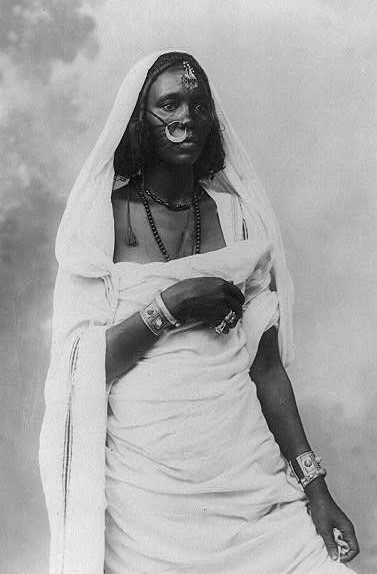
Volutaar Enu Duvernay.
Audio Log Transcript
Date: 2012/11/29 @ 17:20
Interviewer: Dr. Isabelle Beaumont
Interviewed: Volutaar Enu Duvernay
Forward: Gaining an interview with the Volutaar is quite the feat. While not quite as important as Enitan Sabatier in the hierarchy of the Darkwater Lodge, Enu Duvernay is the keeper of the Lodge's lore and holds a position of religious authority within the sect that may be equal to that of the Karcist.
[BEGIN LOG]
Dr. Beaumont: Good evening Ms. Duvernay. Or should I say Mrs. Sabatier? I do not wish to be rude.
E. Duvernay: <laughs> Ms. Duvernay is fine if we must be formal. Enu works as well, I do not stand on protocol with baƙo'ta13.
Dr. Beaumont: Ok, Ms. Duvernay. First, I want to thank you for taking the time to speak with me. I appreciate that your people would prefer to remain secluded, and I understand the great trust you have shown in me.
E. Duvernay: Of course, Dr. Beaumont. Manma Natau speaks quite highly of you. Her praise does not come lightly, so you must truly be special.
Dr. Beaumont: I… I'm not sure what to say to that. Thank you. It is always nice to be recognized by one's work. <paper rustling> Now, if I may, I'd like to discuss with you a bit about your history. I understand that you are the keeper of the Lodge's oral tradition?
E. Duvernay: I suppose you could look at it that way, Dr. Beaumont. I am the keeper of the tales primarily because I remember most of them. We have not needed to pass the stories from mother to daughter in quite some time. <short pause> So yes, for your purposes, I am.
Dr. Beaumont: Well, that should certainly make this easier then. I am curious about the time after you first arrived on this side of the Atlantic. I know that your people would rather not speak of those times, they have all referred me to you.
E. Duvernay: Those were dark days indeed. Those are unpleasant memories for my people; we do not like to dwell upon them. Naman da ke Tsatsa led us then, though his eyes were clouded by hate, and his steps were no longer guided by Nyamien. <a longer pause>
Dr. Beaumont: If you would rather, we can speak on other things-
E. Duvernay: No. I think it important that we face our sins, learn from them. <takes a deep breath> In those days, we were hunted. Before, Naman was the son of a holy man, a leader among all the tribes of the Akan. When first we came across, we had been tricked, sold onto the ships of the kasuwa bayi by those Wise Ones who were jealous of Naman's father, and his close walk with Nyamien. When we sailed, we were told it would be to a new world, where Naman would share of Nyamien to our peoples who had already sailed.
It became clear very quickly that this was not how it was to be. Naman was beaten without mercy, chained in the bottom of the ship, held mostly submerged beneath the offal of all those trapped within. It was there his hate grew, in quiet stories told in whispers while huddled in a stinking ship surrounded by the dead and dying. It was in those stories did we hear the corruption of ŋorok'si na Hargitsaa, the Butchers. <another long pause>
And when we landed, Naman stepped free from the boat, the white devils nothing but empty husks behind.
Dr. Beaumont: So you were not brought here as slaves?
E. Duvernay: Oh yes, we were slaves. Maybe not to the Português or the Danêsh, but we were still slaves, and Naman held our collars.
Dr. Beaumont: Is that why he was so violent after?
E. Duvernay: Perhaps, in part. The call of the ŋorok'si na Hargitsaa is an alluring one, chaotic, corrupt. To pull upon their power is to pull upon their corruption, the taint of their evil is close to the surface. It is easy to gain strength, but not so easy to avoid the call of that Abyss. Naman was already so full of hate and rage. Hatred towards both the kasuwa bayi, but also to the others, those that tricked him.
Dr. Beaumont: Which is why he didn't try and protect the other slaves.
E. Duvernay: He did not care what color their skin was. He cared only about his hate. Eventually, we could no longer even call it vengeance. It was murder, plain and simple. When June led his uprising, we thought that things would be different. After, when the whites had all been killed, Naman would not stop. Could not stop. So many of our brothers and sisters fell to his knife, to his call, to his halkost. <another long pause>
Dr. Beaumont: We do not have to continue, if you would rather speak on something else.
E. Duvernay: You are kind, but no. I must finish this. We tell this to our children, so they know the danger of drawing too much upon the ŋorok'si na Hargitsaa.
I was not able to stop him. I tried, but I was just a girl then, not strong enough. It was Aquashie and Breffu that finally stopped Naman, though the effort cost both of them their lives. They fought for several days, and many of the Holkost were used up in the struggle. In the end, Naman da ke Tsatsa lay wounded, Aquashie was dead, and Breffu was much diminished. When the soldiers came, she had not the strength to hold them, and she took her own life.
Dr. Beaumont: Breffu was your mother?
E. Duvernay: She was Volutaar before me, Naman's only confidant. He raged at her betrayal, but she had cursed him, given him a sickness. Nyamien touched her, gave her the strength to end Naman's bloodlust, but not enough to stop his bloodlust. It was then that I began to whisper the secrets of Nälkä to Enitan. He was a boy then, younger even than me, but he would grow. Together, with the few Halkost that remained, we carried Naman from that place.
Dr. Beaumont: It was then that you came here?
E. Duvernay: Not to here, but to someplace similar. I doubt Papa Legba and the others would have accepted us with Naman still as Karcist. That came later.
Dr. Beaumont: After Mr. Sarbatier?
E. Duvernay: Yes. My lovely Enitan. When we arrived here, in the place near to this, he was such a help in getting us settled. We had to hide, find a way to fit in with those few communities that were here at the time. Naman would fade in an out of lucidity, but mostly he would lay upon his mat in the heat and rant. It was Enitan that helped set up our small village, did most of the fishing, traded with the plantations. We became the Sarbatier and the Duvernay almost overnight.
<sigh> We were a small commune, but too many to pass as a single family. Naman had lost control over the Halkost, and they were disoriented, lost. He had never let them think much for themselves, and now they had forgotten how. Enitan helped there, too. I taught him enough of how to draw upon ŋorok'si na Hargitsaa to save them, to take away their fear. It definitely made it easier to have their help in keeping us fed.
Dr. Beaumont: How did the other… um, immigrants in the area react to you?
E. Duvernay: The other slaves, you mean. It was fine, for a while. They would trade secretly with us, share some of what they brought in during harvest. Some of them taught us how to plant and harvest for ourselves. We met the Natau during that time, and their kindness saved our family, after.
Dr. Beaumont: After?
E. Duvernay: Eventually the other slaves grew resentful of our freedom. I'll never know what exactly happened. Maybe Enitan was too bold? Maybe one of the plantation slaves wanted to gain favor with their masters? It didn't matter, the result was the same.
<takes a long breath> They came in the night, raided our village with fire, the gun, and the sword. They burned our fields, our homes, and… and they woke Naman da ke Tsatsa. No, no more. I have shared enough truth for today.
Dr. Beaumont: All right. Would you like to pick up later, then?
E. Duvernay: Yes. That would be better.
Dr. Beaumont: Thank you, Ms. Duvernay.
[END LOG]
Afterword: It is interesting to note that while the Volutaar speaks so carefully about not drawing upon the Archons, it is clear that she has done so extensively. Her appearance is still that of a young girl, despite her obvious age. The Manmas Natau are much older in appearance, and I wonder now if that is by choice, or their approach to Lihakut'ak14 precludes the use of it so extensively upon themselves.
The Lodge celebrates several holy days, all centered around the cycle of purification and cleansing. The primary Äkum'nälkä festival is the Akwasidae festival, a fourty-day season of celebration which culminates in a purification rite called Odwira. Whether by coincidence or design, this season now coincides directly with the Mardi Gras month-long festivities. This ritual is of paramount significance to the Lodge, and has both public and private elements.
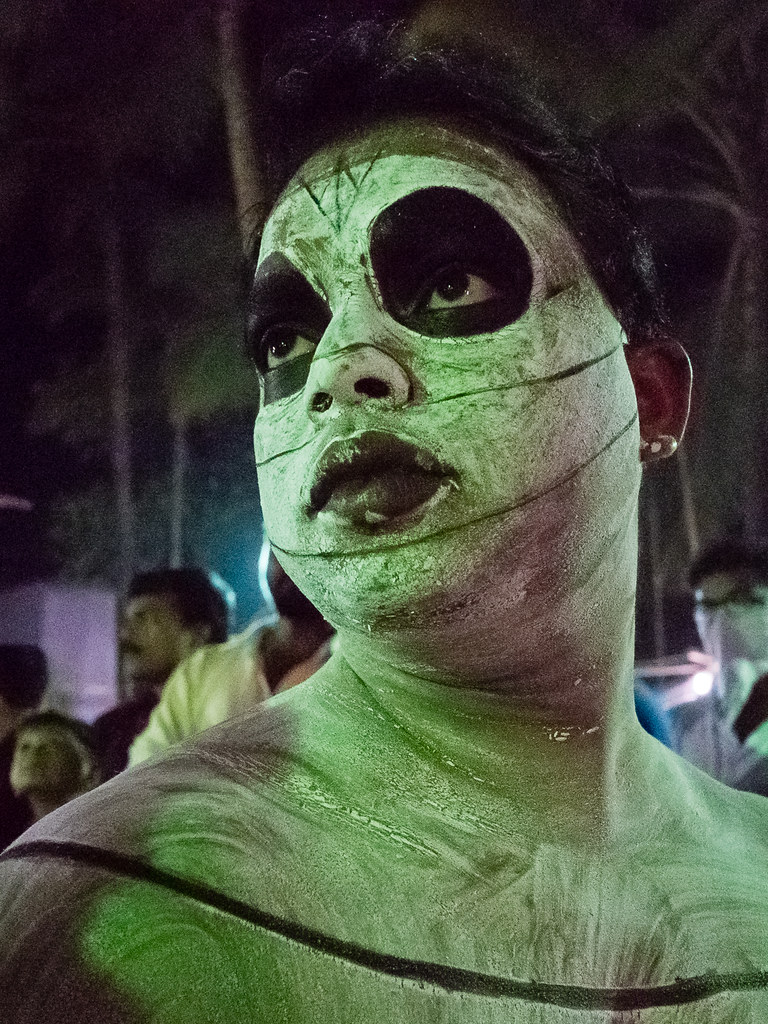
A Sabatier family celebrant at the beginning of the Nsämanf'tsatsa15 ritual.
The public portions of the ritual revolve mostly around visitation with their ancestors, which appears to be quite literal. Each Tenth Night during the festival, one of the lower-ranking members of the Lodge will undergo ritual cleansing and will be anointed as a vessel for one of the Lodge's ancestors.
This portion of the ritual involves 10 days of self mortification and excess, which daily includes hours of manual labor, extensive bouts of ritual mortification of the flesh, and celebrating long into the night. At the end of the ten-day period, the celebrant is nearly dead from exhaustion and blood loss. It is then that the celebrant is taken into the larger of the two residential structures,16 where they meet privately with the Karcist and the Volutaar.
If the celebrant is not acceptable at the end of this period, they will be marked with a series of ritual scars, and they will not be allowed to attempt again for an indeterminate period of time and will no longer take part in the remainder of the festival. If the celebrant is found to be an acceptable vessel, they will re-emerge as a host for one of the Lodge's ancestors, which they will "carry" for the next several days. This period is marked with more celebration and excess, eventually leading to the "host" returning to the big house with the Karcist, from whence they will not return.
Event Log
Date: 2013/02/12-13
Observer: Dr. Isabelle Beaumont
Event: Private Nsämanf'tsatsa Ritual, held at "The Big House", Darkwater Lodge Compound, La Rue Macabre.

The Baƙar Fata, the Black Flesh.
21:11 -
All this week, I've been spending a lot of time at the Darkwater compound, taking notes about the Akwasidae festival. Despite being so closed-mouth about their private rituals, the Darkwater people are really quite warm and inviting. Just as the celebration outside have increased in intensity over the last several days leading up to Mardi Gras, so have the celebrations in La Rue Macabre begun to reach ever more frantic heights.
There are what amounts to parades every night, processions of what must be everyone in Rue Macabre dancing in the street down to the Market Square, where music and drinking will continue long into the night. I've not gotten much sleep over the past few weeks, and it's been quite the adventure. It has been a nice change from the slow pace of life at the Natau village.
The Darkwater folk have been right there in the thick of it, especially when one of their Nsämanf'tsatsa is around to join in the festivities. Whenever one of them joins the fray, the Darkwater people become ever more frantic in their celebration of life. Some of the things I've seen out in public surpasses even the debauchery I've observed out in the Quarter, and no one here seems to even bat an eye.
After the last Tenth Day ritual, I asked Ms. Duvernay if she'd be willing to let me observe the private goings on up at the Big House. At first she seemed quite hesitant about it, but her mood changed a great deal after speaking with Enitan Sabatier.
02:21 -
I remember thinking that having an opportunity to view an Äkum'nälkä ritual up close would be quite exciting.
I was told that Neo-Sarkic rituals are much more vibrant and stylized than the Proto-Sarkic rituals, and I'll admit, I was filled with more than a little trepidation. If my experience with Nälkän rituals has taught me anything, I could never be truly prepared.
We began with a procession back through the streets of Rue Macabre from Market Square to the Darkwater compound. As we drew nearer to the compound, the mood of the crowd became increasingly somber, so that as we passed under the arch and onto the Darkwater grounds, the Lodge members walked in silence, their steps matching the cadence of Karcist Enitan's low chant.
I stood in the courtyard with the rest of the Sabatier & Duvernay as the Nsämanf'tsatsa gave his farewells to the rest of the crowd. They had lapsed entirely into Akan Kasa, and I could only catch a few words here in there that were obviously more Adytite in origin. As I waited, the Volutaar slipped up beside me and began to translate some of what the Nsämanf'tsatsa was saying.
She told me that the ancestor that was inhabiting the young man was an ancient matron named Akuba Mánsã Nkruamah, and she was born and died long before the Darkwater peoples left Ghana. She was extolling her family on the virtues of living a simple life, and to take care of the children.
After her speech, she followed Karcist Enitan into the Big House, and I followed along with Ms. Duvernay. I wasn't sure what to expect going into that house. I'd not yet had the opportunity, and I guess I was expecting something similar to the communal house that the Natau live in.
I was not expecting the tasteful decor that would have been common in any of the old and majestic houses that are everywhere throughout the Quarter. Whatever the Sabatier and the Duvernay are, they've been established families in the Quarter for a long time, and the wealth exhibited in their house shows it.
The Karcist led us downstairs and into a cellar I had no idea could even exist in the near-wetlands that seemed ever present in Rue Macabre. The air grew cool and damp, with a musty odor reminiscent of an old mausoleum. The stairway was lit by old Edison lamps, and it continued down far deeper than I expected.
Eventually, we paused before an open doorway. Up until this point, the Nsämanf'tsatsa had been chatting amicably with both Mr. Sabatier and Ms. Duvernay, but as we stepped down onto the final landing before that door, she fell quiet, and I could see her host's hands trembling slightly as he waited patiently for whatever was to come next.
There are more Darkwater Lodge members than we originally estimated. Far more.
When I turned the corner into that room, I turned into the gaping maw of a hell I never knew could exist. The walls of that vast chamber were lined with thrones, and upon each sat a thing so twisted that I struggle to even remember. Corpses, all, but cursed with animation and a kind of half-life. Each was emaciated and skeletal, but the normal processes of death and decay had been halted by the same horrible power that sustained them.
The Karcist and his Volutaar ascended to a round dais in the center of the room, upon which stood a small plinth. Cradled in a wooden stand atop the plinth was a black bowl, covered in dark stains and sigils in a language I did not know. Perhaps someone more versed in the language of Adytum would be able to decipher the words upon that fell instrument, but I fear their sanity would be wrested from them by such a translation.
The Nsämanf'tsatsa ascended the dais behind the two, and s/he knelt before them. I stood far back, just inside the doorway, afraid to step too close to the things that slowly writhed on their thrones. I counted nearly three hundred such occupied thrones arrayed around the room, with only a few score more beyond that.
It was as I tried to quickly count the thrones did I realize that what I thought was merely texture to the floor was a network of desiccated umbilical cords stretching from each of the things on their thrones. The twitching mass merged together beneath the raised dais, where I assume they coagulated to form the trunk of the plinth atop it.
The three upon the dais began to chant in unison, using a variant of Akan-kasa that was far more familiar to me, after listening to the cursed syllables of true Adytite I'd studied before. I only caught a few words here and there, and it was enough for me to wish I had no understanding of that tongue. They spoke, perhaps, of Apotheosis, of ascenscion, and as they chanted both the Karcist and the Volutaar began to change.
I thought that they had begun to reach towards each other, their hands sliding over each other's exposed flesh. When they began to meld together into a single thing, I had to force myself to stay quiet. For long minutes I watched as they began to dance slowly around the kneeling form of their ancestor, stroking them with more hands than even their melded form should have had. It was as if there were three different beings melded into that abomination, rather than merely the two.
The realization hit me like a stone in my stomach, and as they began to pull something wet and wriggling from the torso of their kneeling companion, I turned and fled that place.
Naman da ke Tsatsa. The Flesh that Walked. The Volutaar lied to me.
Source: SCP Foundation · CC BY-SA 3.0
Community rating
Was it worth the sleep you're about to lose?